Big Bend Trip Report
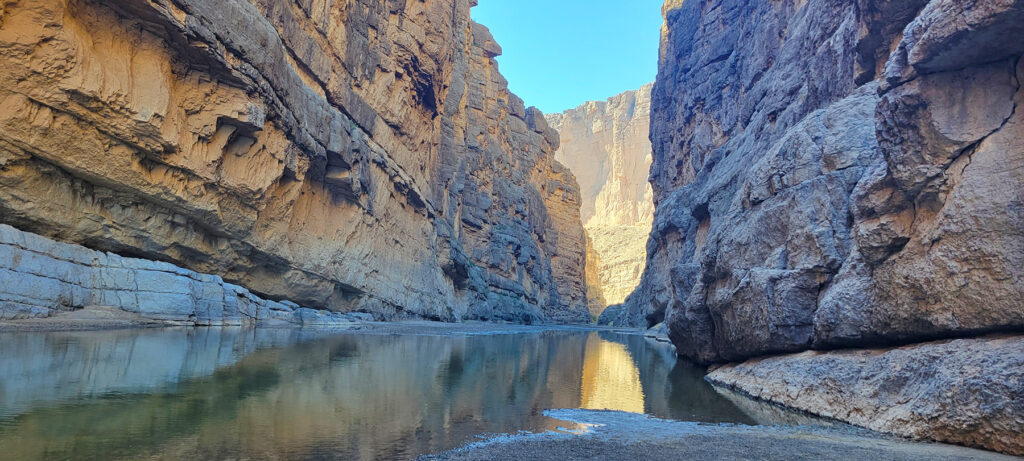
My husband, Mark, is a nature guy and Big Bend National Park has been on his must-see list for years. Unfortunately, it isn’t easy to get there. The closest feasible airport to fly into is Midland/Odessa, but that still leaves a 4 hour drive to the park. But in February 2025 we finally decided to make the trek. I planned for us to stay an entire week there because in addition to exploring the parks, I had hoped that we would be able to sign up for at least a couple of guided activities, like rafting/kayaking, rock hounding, and/or birding. Unfortunately, it wasn’t until after I booked the airline tickets, that I received replies to my emails telling me that none of those activities would be possible. The woman who does the rock hunting tours doesn’t start until March, the birding guide had ended his business, and the river tour company only offered one day-trip paddle in February, and that was to a place that didn’t look very appealing to me. So, I wasn’t sure how we were going to fill 6 full days. But as it turned out, we didn’t do much the first 2 days because it was freezing – literally. The lows were in the low 20’s and the high the first day was in the 40’s. (I believe that this was especially cold for the area.) Plus it was windy! Thankfully it warmed up after the first 2 days. During the time we were there we experienced temperatures ranging from 23F to 89F.
We stayed in a “Casita” that I booked through Airbnb. It was located in the small town of Terlingua, Texas (the closest town to the National Park) Despite the photos, I wasn’t sure exactly what to expect from our casita. Well, the best way I can describe it is a stand-alone motel room with a patio and grill. Along the road that runs through Terlingua, you can see all kinds of interesting-looking accommodations. In addition to a couple of motels and RV parks, there were white teepees, tiny A-frame buildings with decks and hammocks, really tiny A-frame buildings that looked only big enough to hold a bed, and what appeared to be domed tents with ⅔ of the “ceiling” being glass for star gazing, which was excellent in Terlingua. Overall, though, this town is by no means a crowded tourist destination. You can see everything for miles as you drive down the main road because there are essentially no trees or tall buildings blocking your view.
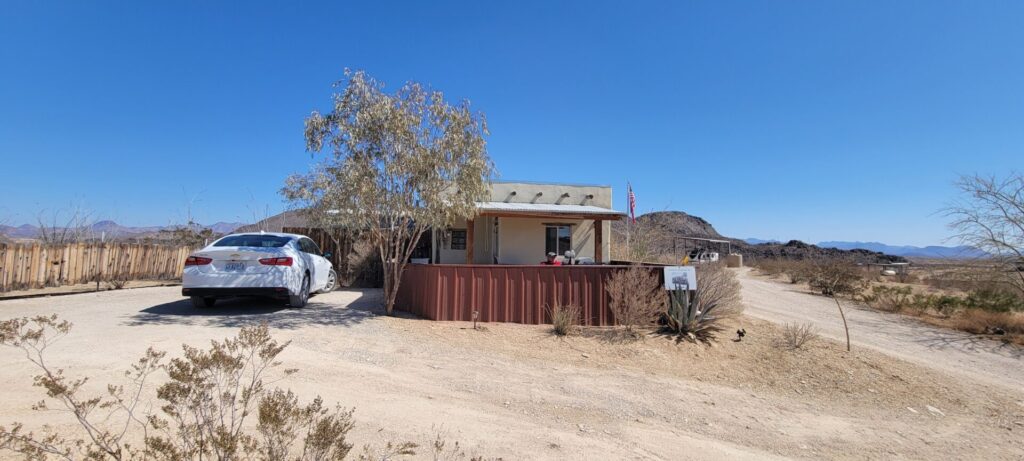
The first day we didn’t leave our room until after noon due to the cold. Then we drove west to Big Bend Ranch State Park and checked out the Barton Warnock Visitor Center (indoors) which had nice displays illustrating the natural history of the region. By the time we left there it was around 2pm so the temperature was up into the 40’s and I was able to tolerate a little birding and a brief visit to Terlingua’s historic cemetery.
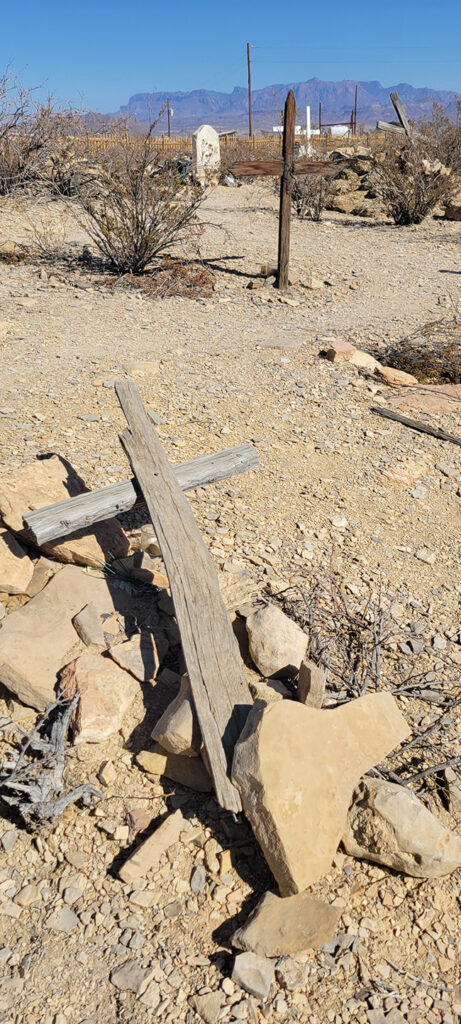
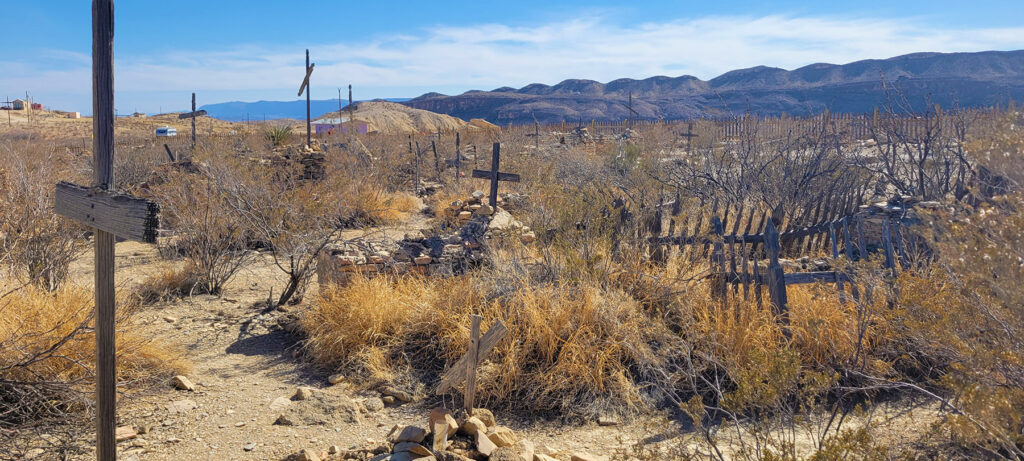
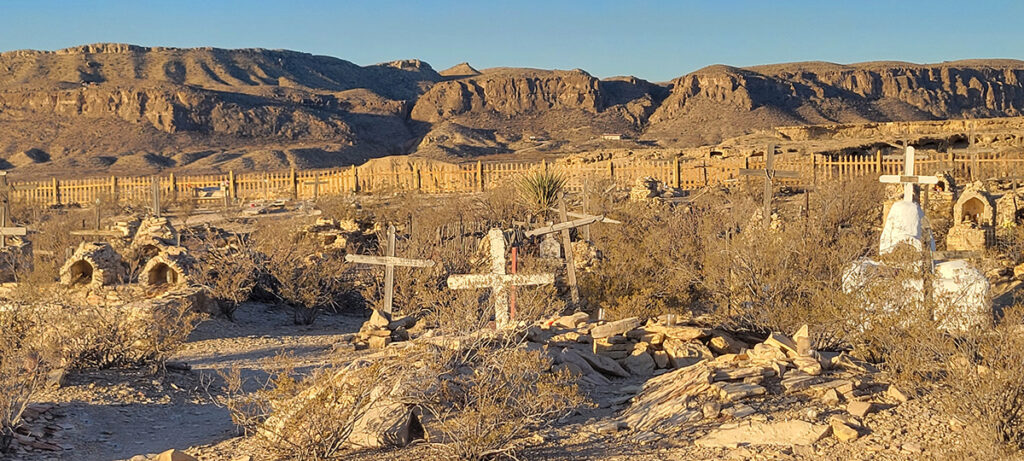
Some people might think cemeteries are only for visiting deceased loved ones, but for me they are a glimpse into the lives of people in the past and sometimes they are also a window into other cultures. Terlingua cemetery was unlike any I’ve ever seen. Many of the graves were simple graves with pieces of wood made into a cross but nothing indicating who was buried there. I believe these were the older graves (early 1900’s) from when Terlinga was established as a mercury mining town.
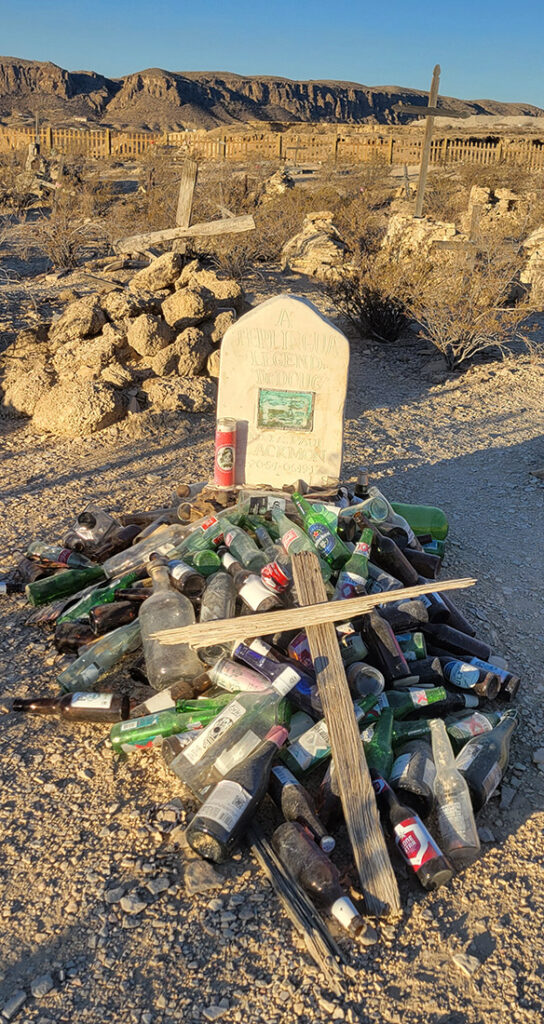
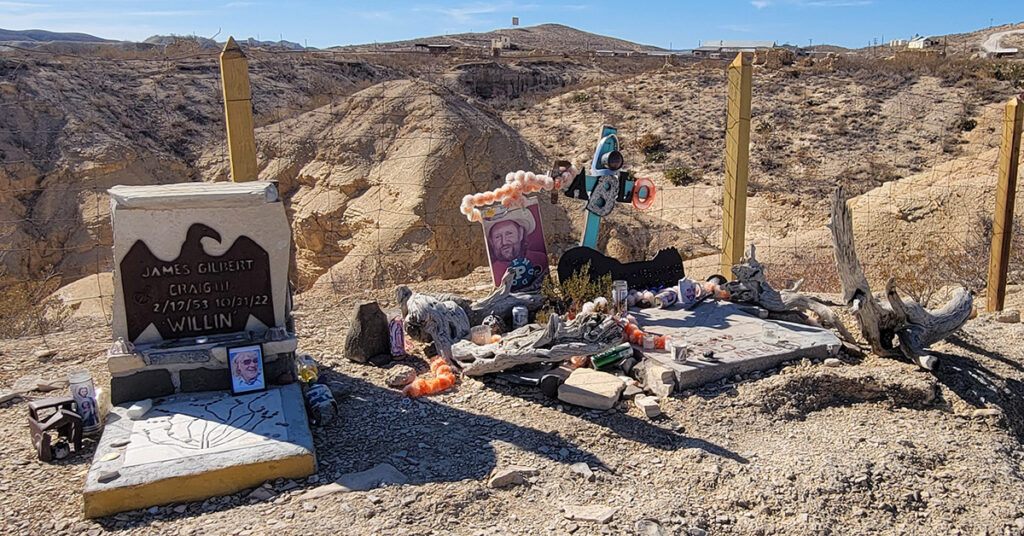
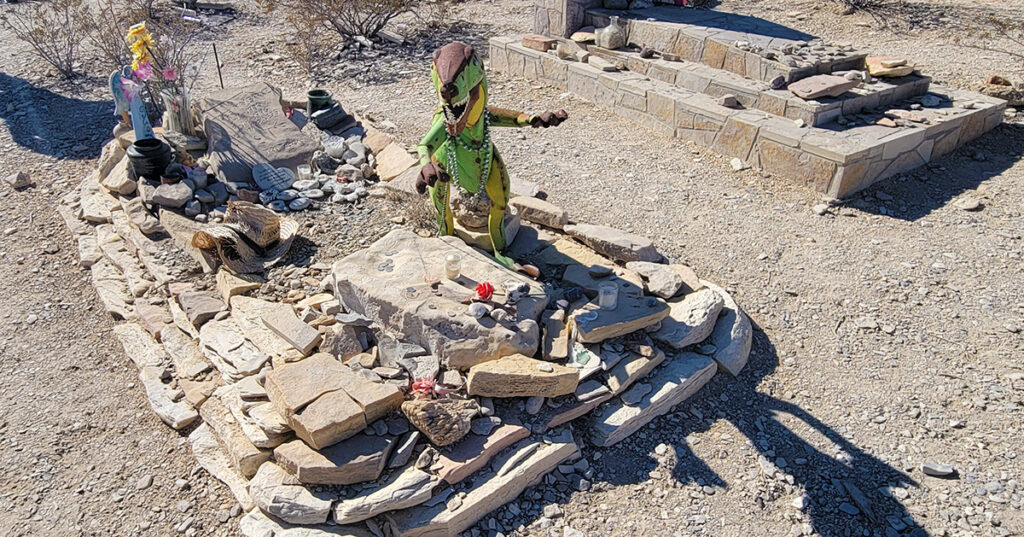
But surprisingly, this small graveyard (just over an acre) contains not only graves from 100+ years ago, but residents are still being buried there today. It makes you realize how few people have lived in Terlingua. The new graves were much more “colorful” than the ones of the town’s settlers. Many of these graves are piled high with all kinds of objects such as tchotchkes, bottles, artificial flowers, and stones. This allowed visitors a much more in-depth look into the lives of the deceased. Typically we only get clues from what’s inscribed on the tombstone, but here you can infer all kinds of things. For example, I imagine that the man whose grave is piled with empty beer and liquor bottles was quite the partier. I’ve included photos from a few of the more unique graves for you to interpret.
After the cemetery, we visited the Terlingua Trading Company. I had read that this was a great gift shop, and it did not disappoint. It had a large main room and then smaller rooms with specific items like Christmas decorations, jewelry, hot sauces, cold drinks, etc. It also had a couple of rooms with historical displays. I highly recommend it.
Our second full day in Terlingua was again quite cold so we waited until late morning to go exploring. We decided to go into Big Bend Ranch State Park on this day because we read that the road going through the park was scenic. We figured if it was too cold to hike comfortably, it was better to miss the hikes in the state park rather than the ones in the national park. Our first stop along the road was to eat our picnic lunch at a picnic area. The teepees over the picnic tables were a nice touch.
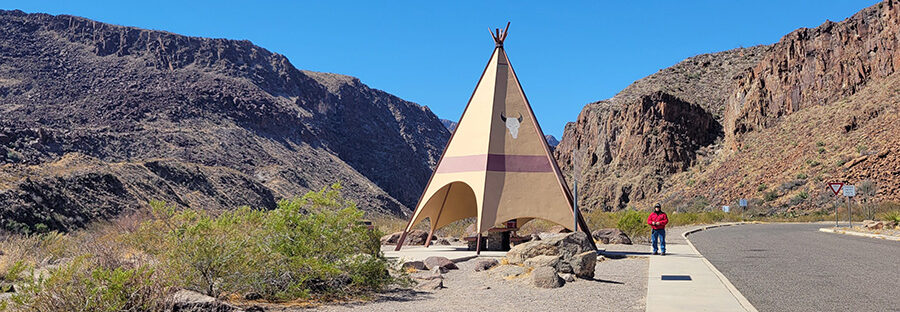
So, the drive was scenic, but it didn’t quite live up to my expectations after having read glowing reviews.
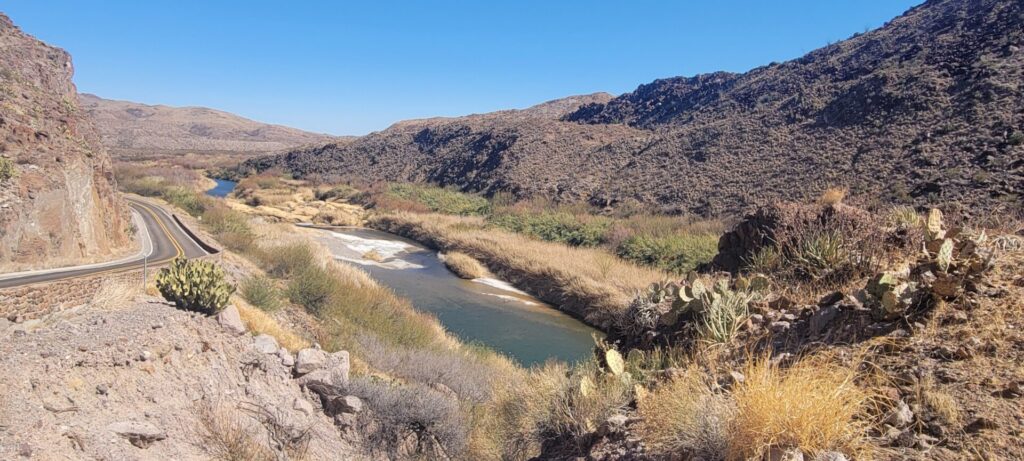
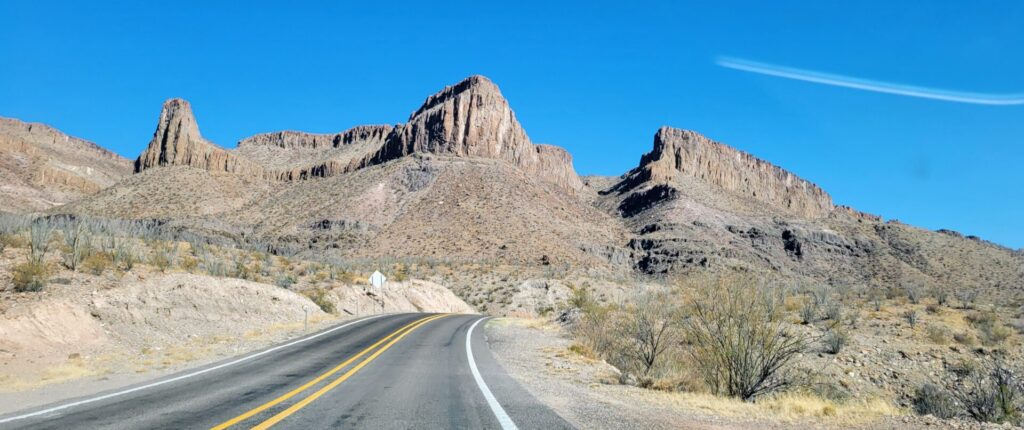
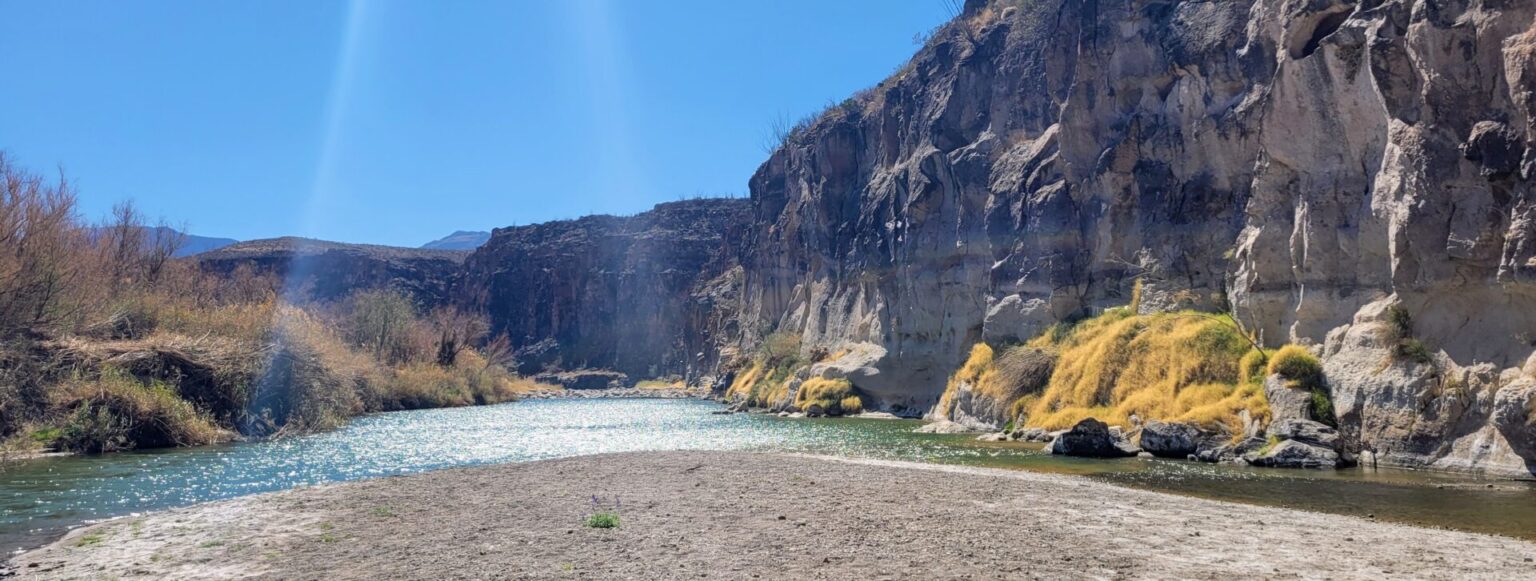
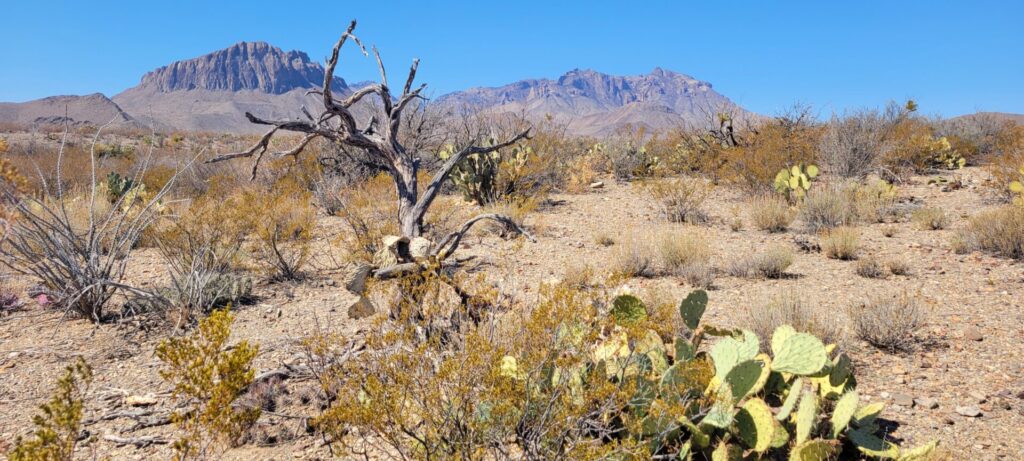
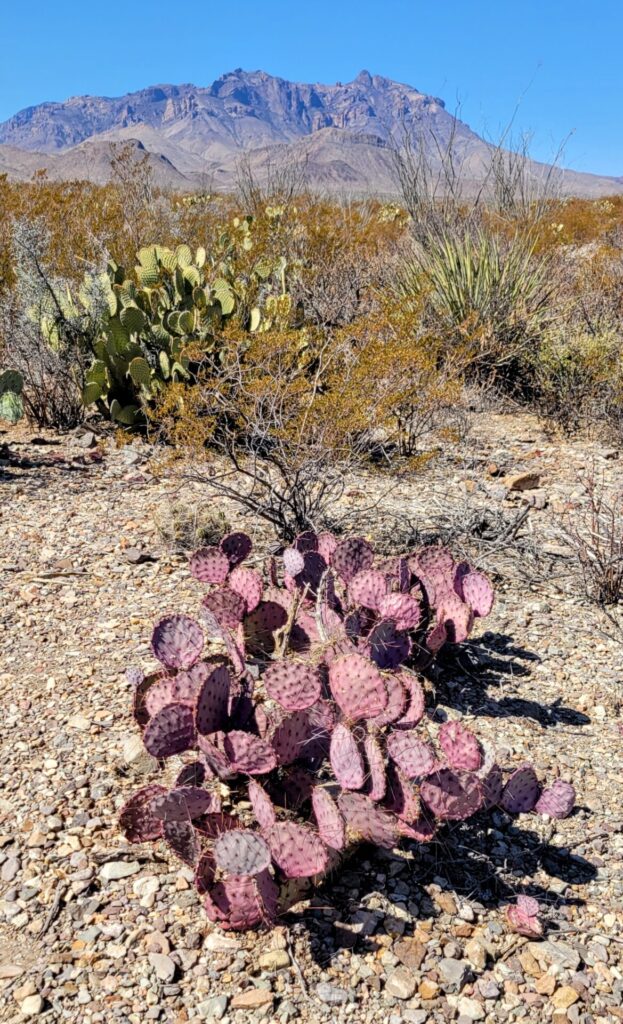
On Day 3 it finally started warming up enough for me to enjoy the outdoors, so we headed into Big Bend National Park. Our first stop for taking a walk was at Dugout Wells and the short Chihuahuan Desert Nature Trail. It was a pleasant walk but not much to see in February, other than some interesting cacti. I especially liked the pink/purple ones.
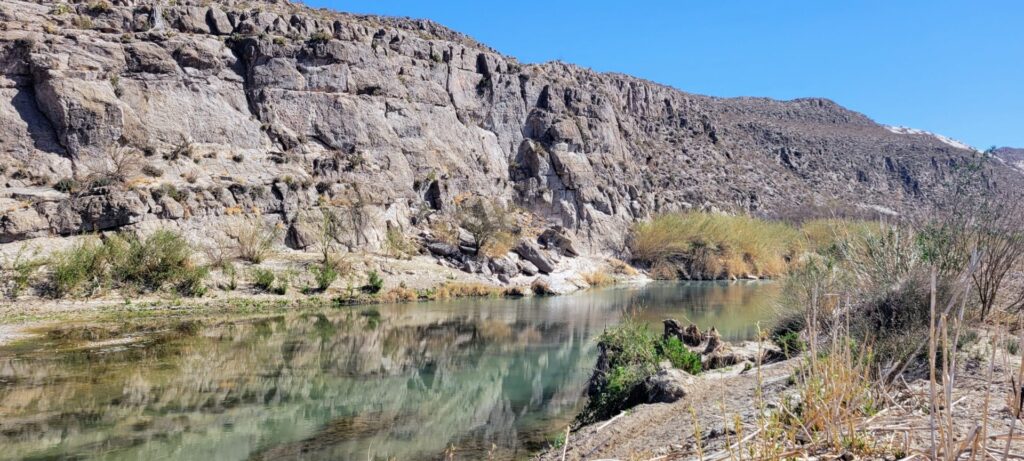
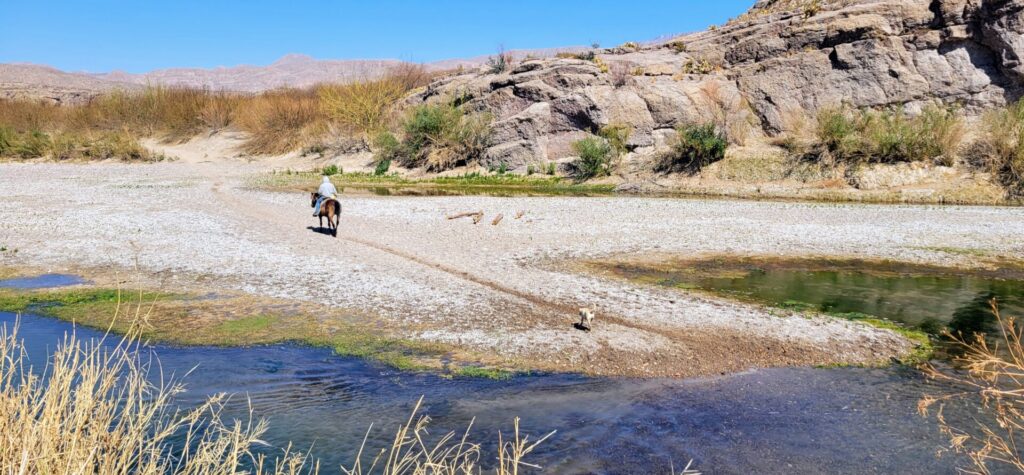
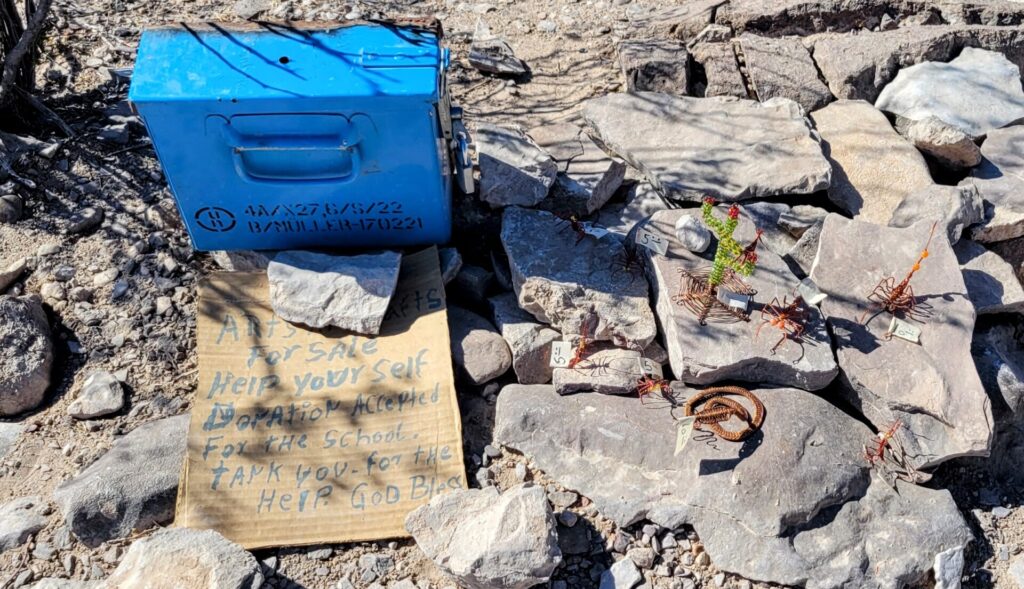
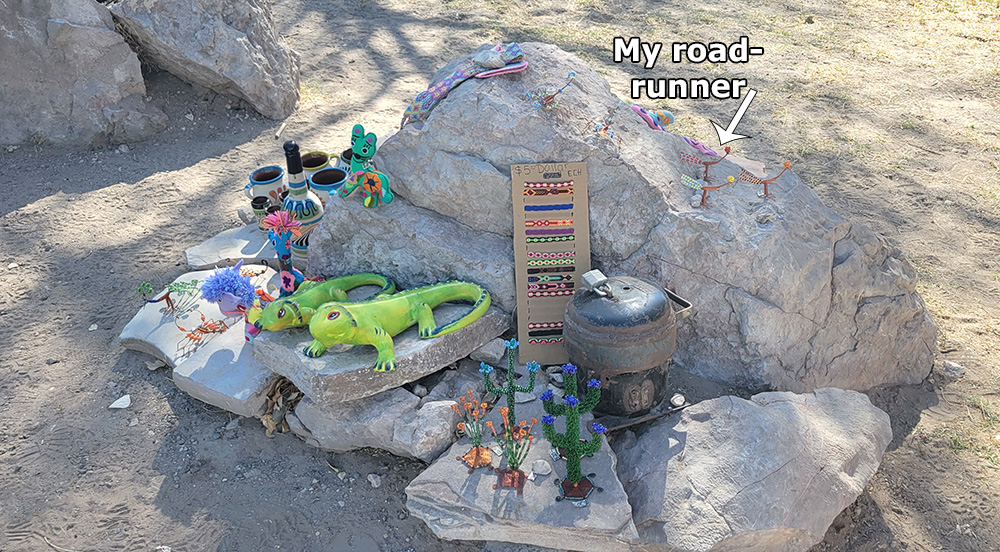
Our next stop that day was at the Rio Grand Village Nature Trail. This walk led down to the river and offered some nice views. We discovered that many of the trails that bordered the river, have Mexican tchotchkes for sale, most of which were figures made out of wrapped wire. Mexican men rode their horses across the river border to put out these handmade items. Each collection of items for sale has a lockbox next to it where you can deposit U.S. dollars.
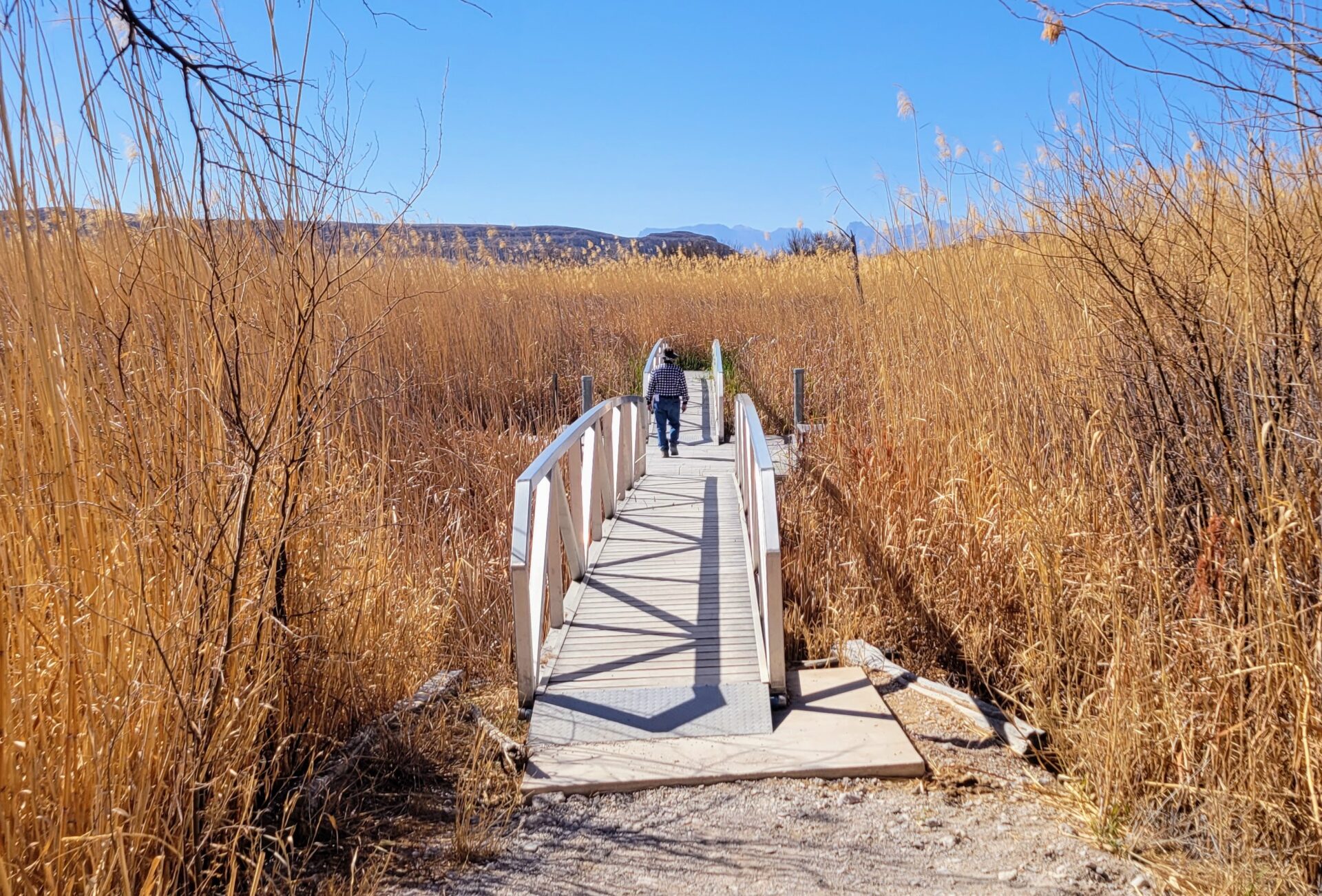
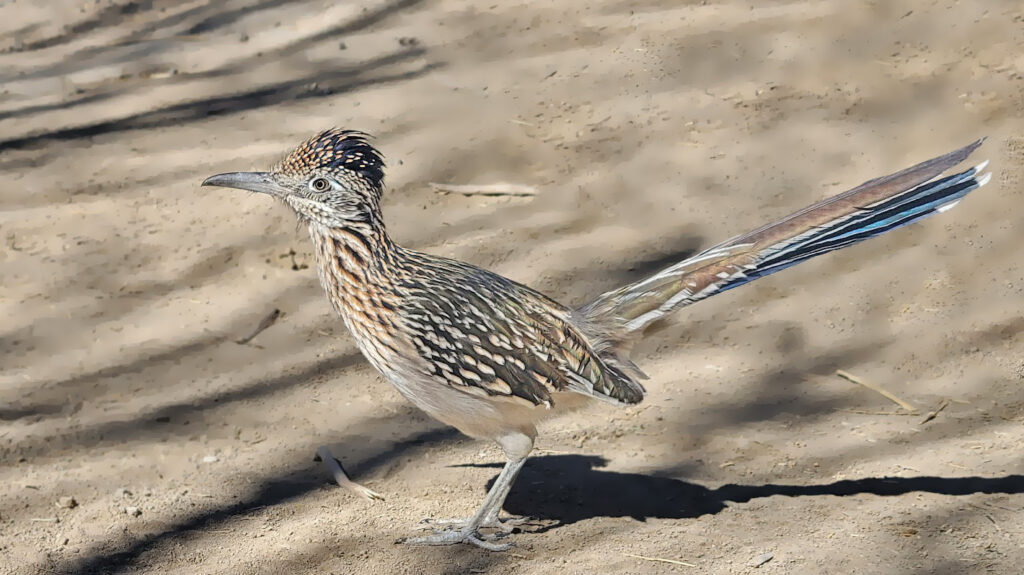
Before leaving the Rio Grande Village area, we walked through the campground because I heard it was a good birding spot. We didn’t see a lot of birds, but I did see my first roadrunner, which I was very excited about!
The following we got an early start, and headed back into the national park. Our first stop was at the Sotol Vista Overlook. The views were spectacular but the photos don’t do them justice.
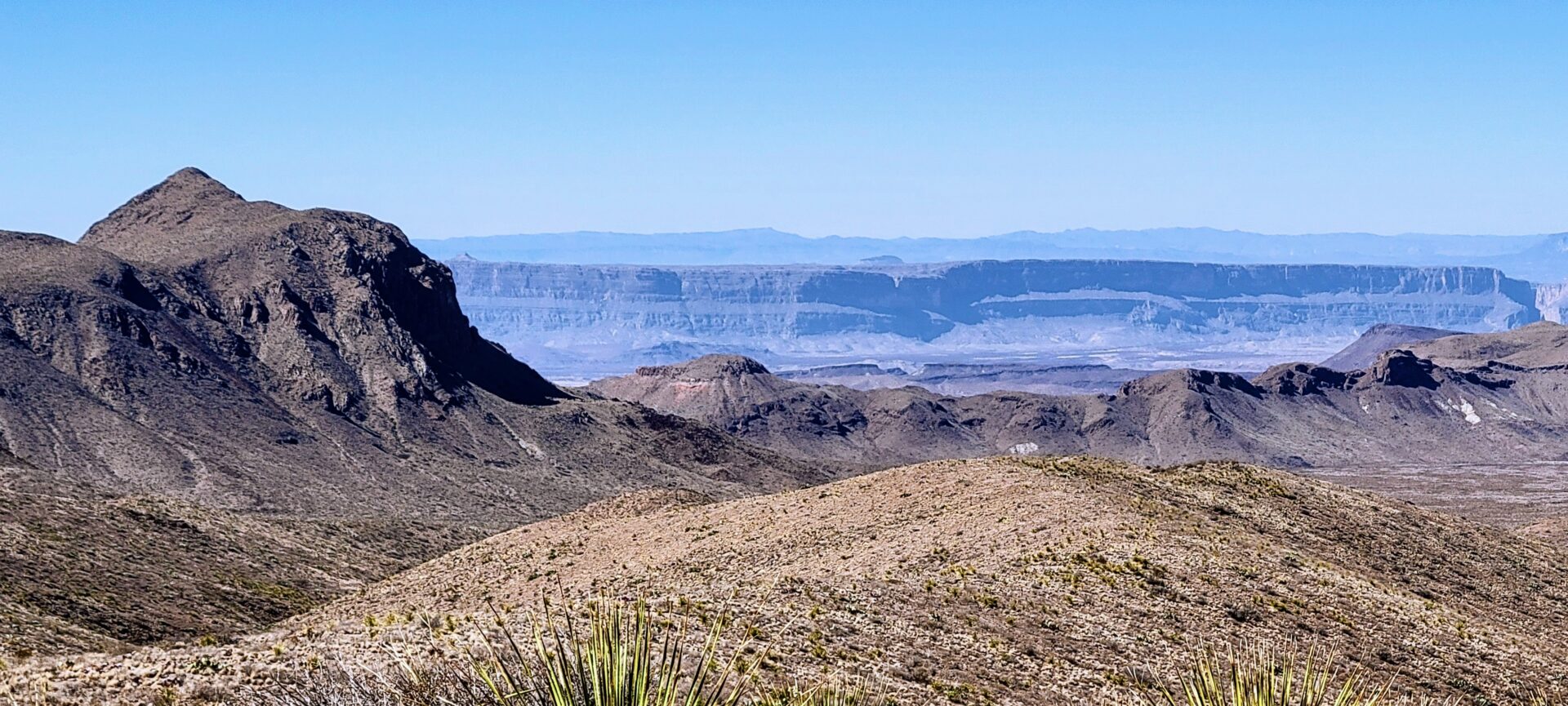
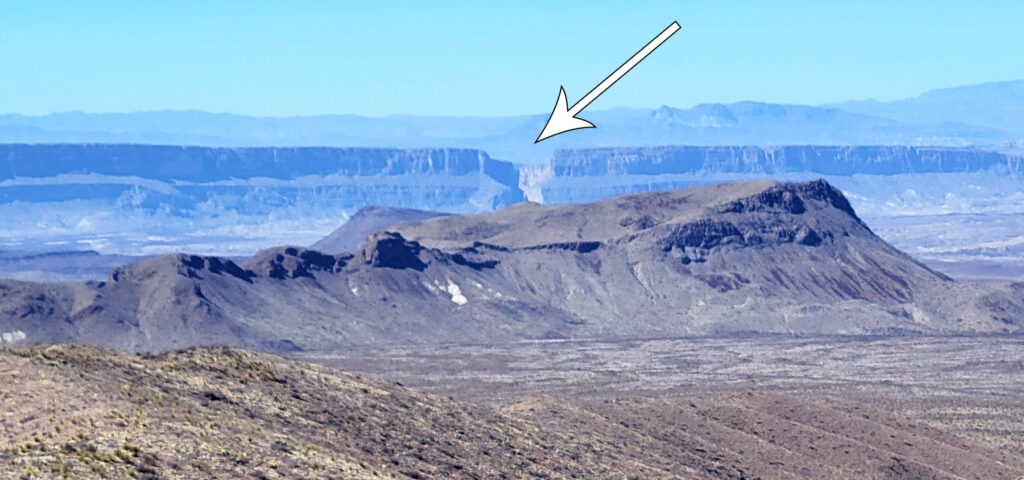
Our primary destination that day was Santa Elena Canyon, which was my most anticipated site on the trip to Big Bend. Despite the Sotol overlook being approximately 14 miles from Santa Elena Canyon, you could actually see it as an obvious notch in the distant mesa. And as we drove closer to the canyon we pulled over several times to get photos of it.
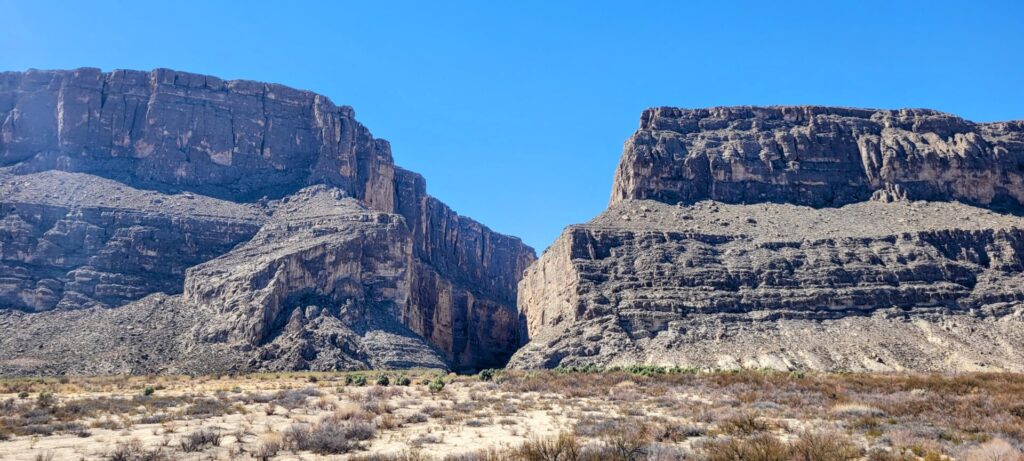
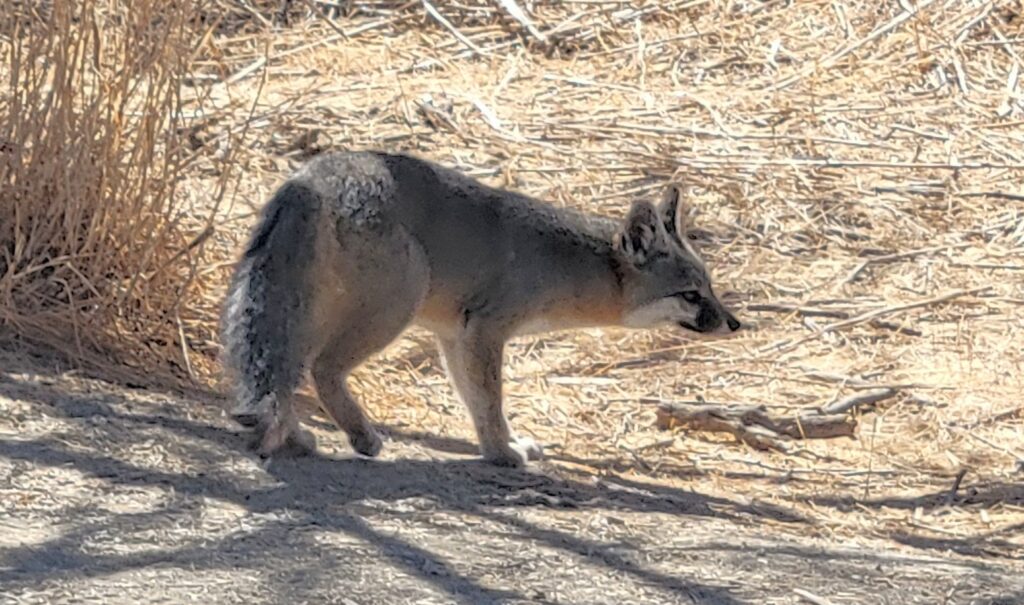
We stopped for a quick picnic lunch right before we started along the Santa Elena Canyon Trail. While we were eating, we got a visit from a gray fox and several roadrunners.
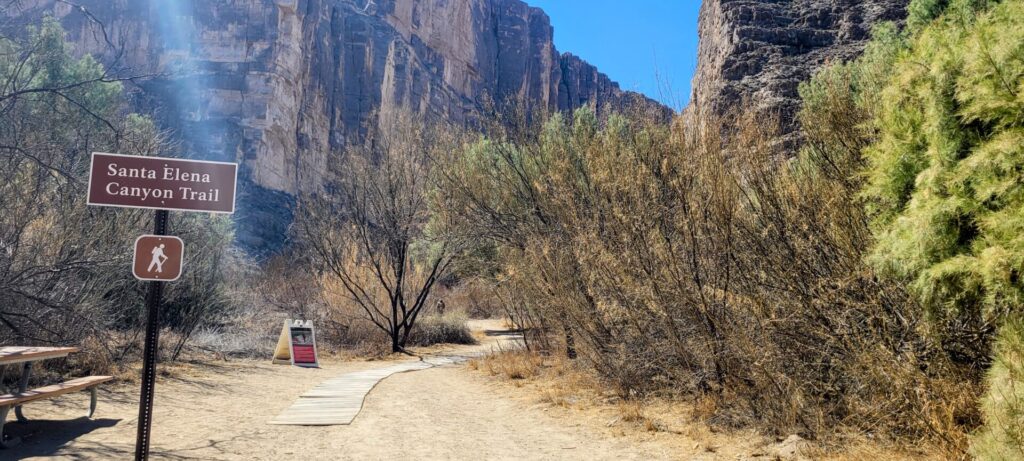
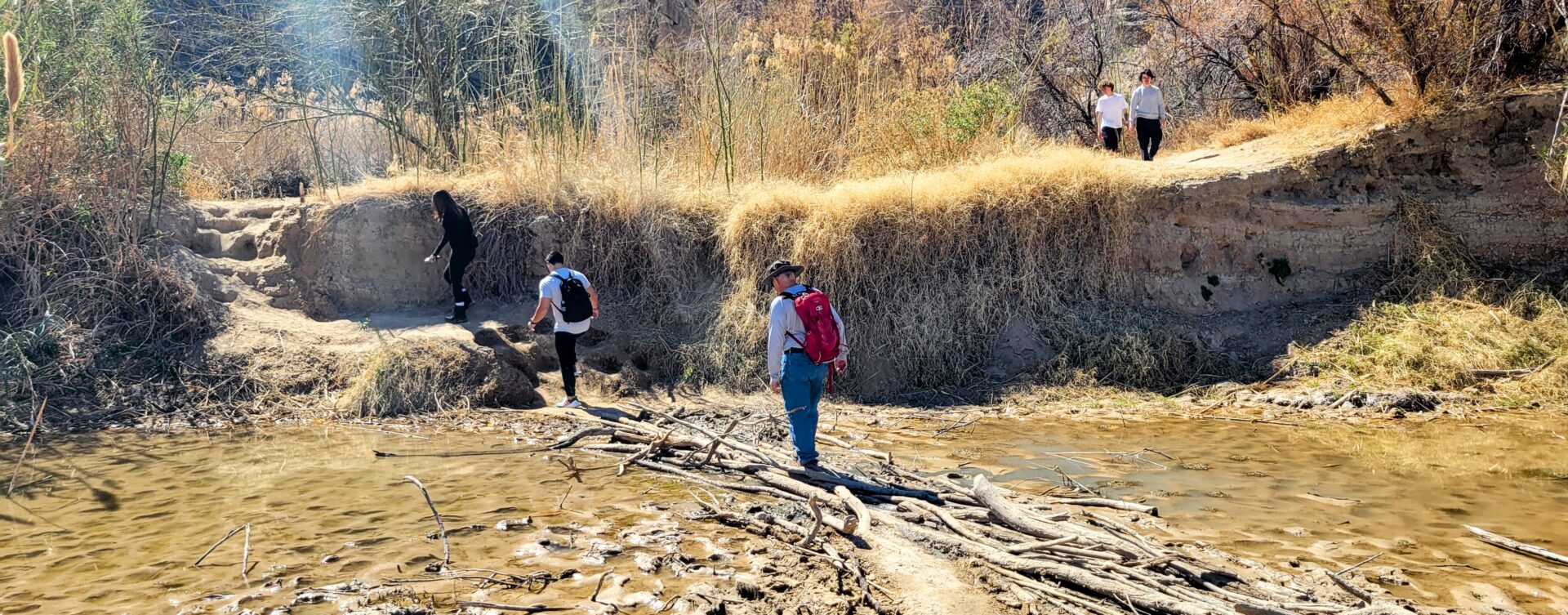
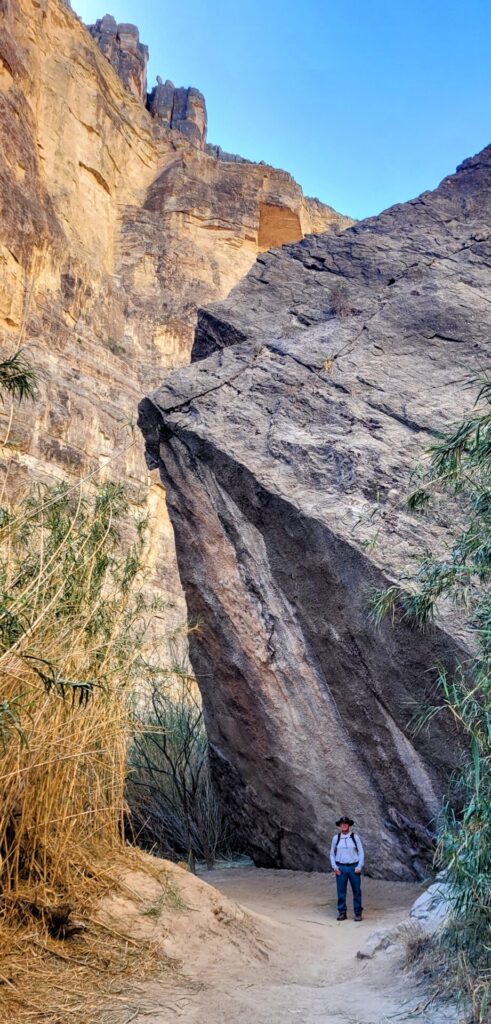
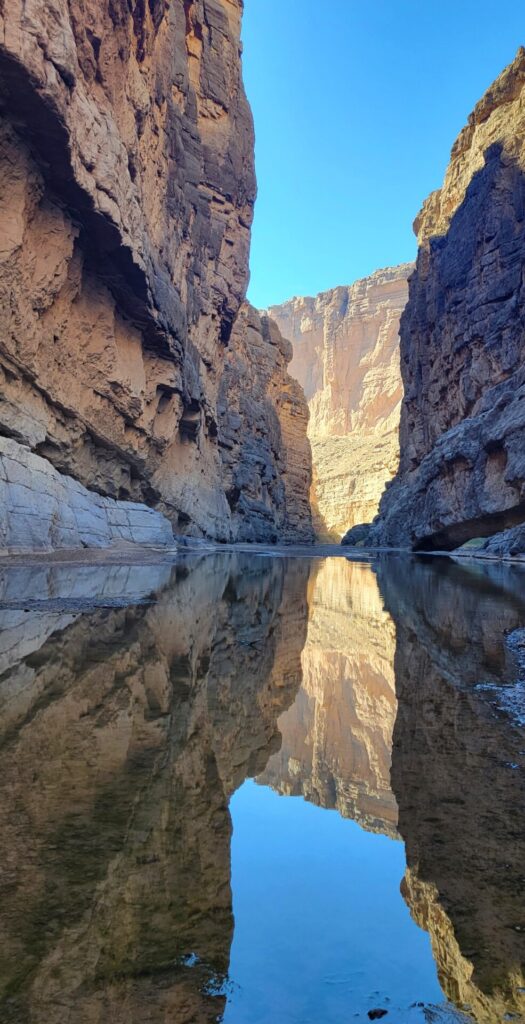
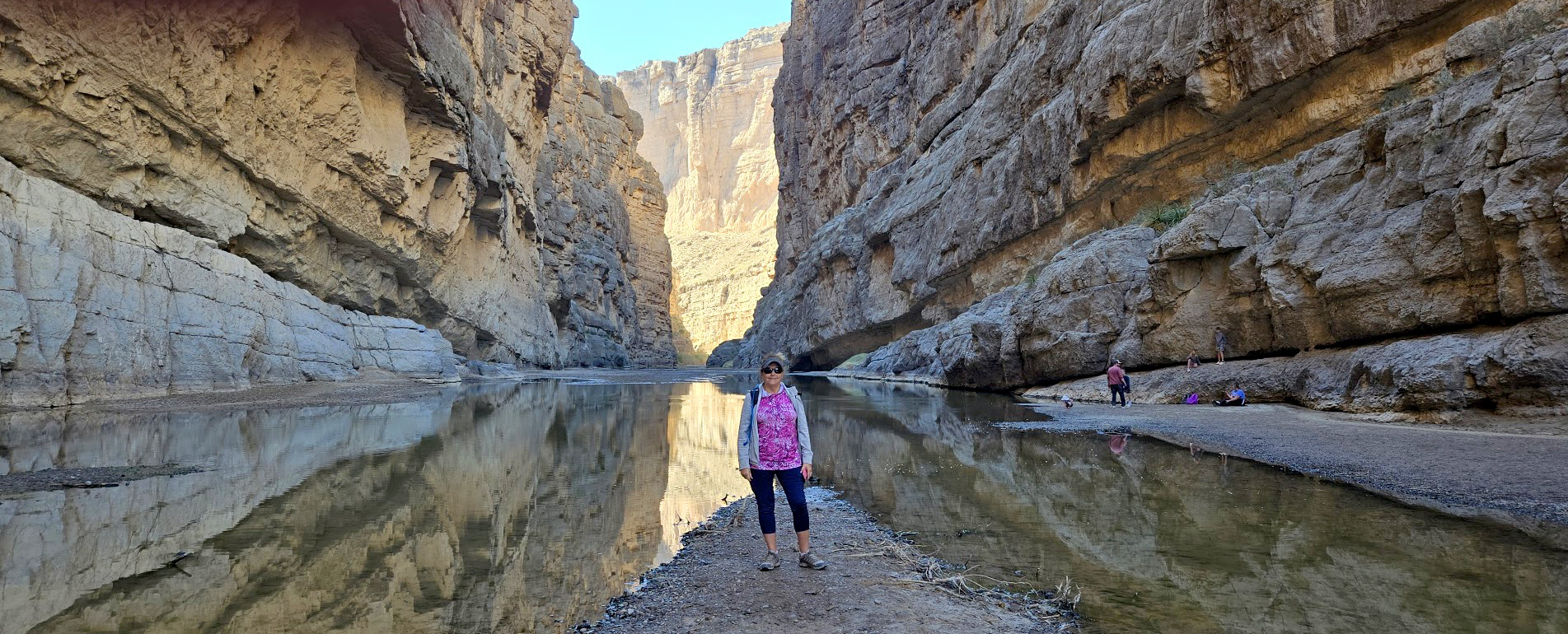
The Santa Elena Canyon Trail didn’t disappoint! The only “challenging” part of the trail was at the beginning, where you had to balance on some small logs to avoid falling in the muddy stream.
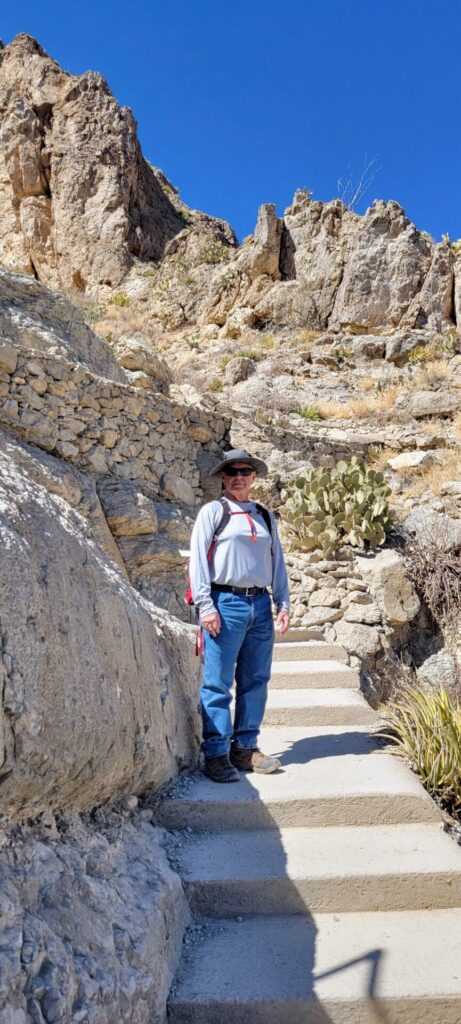
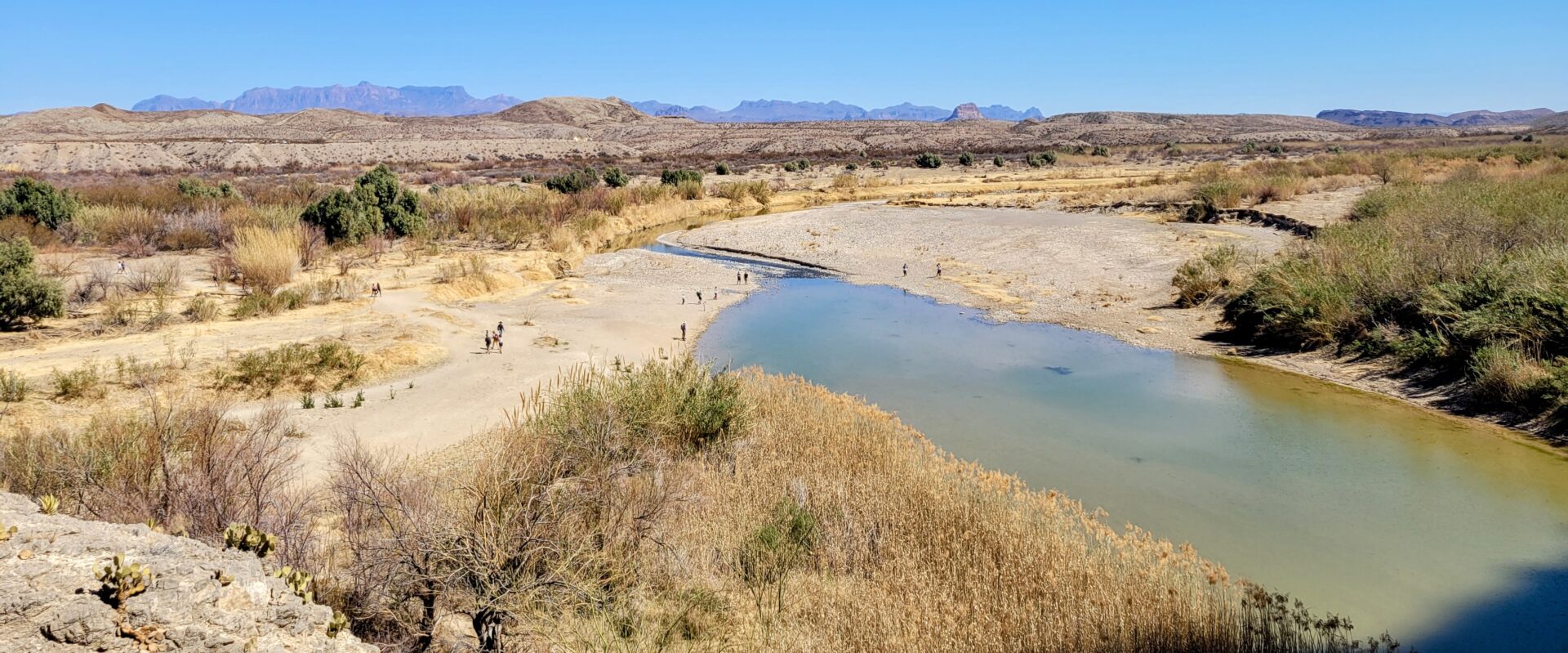
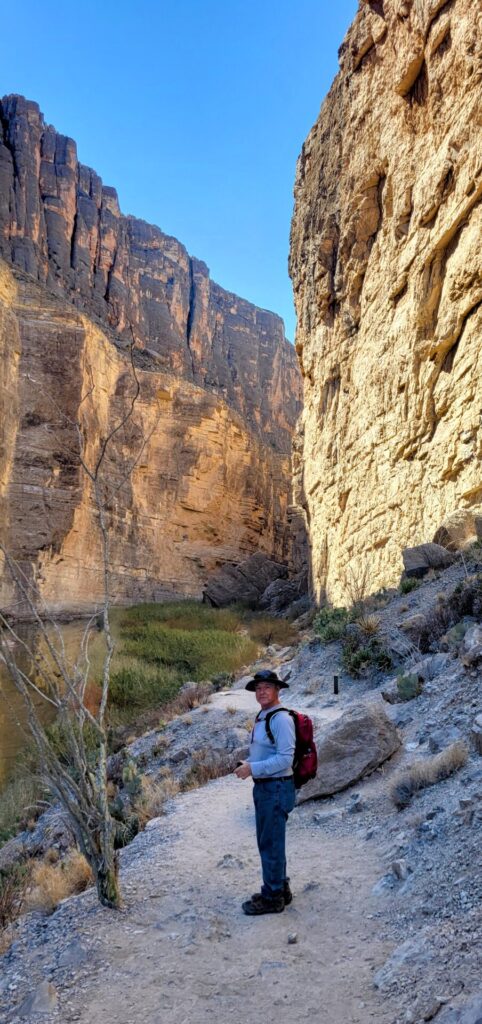
After the stream the trail starts climbing up steps in the rocks, and before entering into the canyon, there’s a nice view looking back at where you’ve been. In the photo below on the right, the people on the right side of the river had crossed over just so they could say that they were in Mexico.
The next morning we headed out pretty early to Mark’s most anticipated destination – The Lost Mine Trail. The drive there was quite scenic.
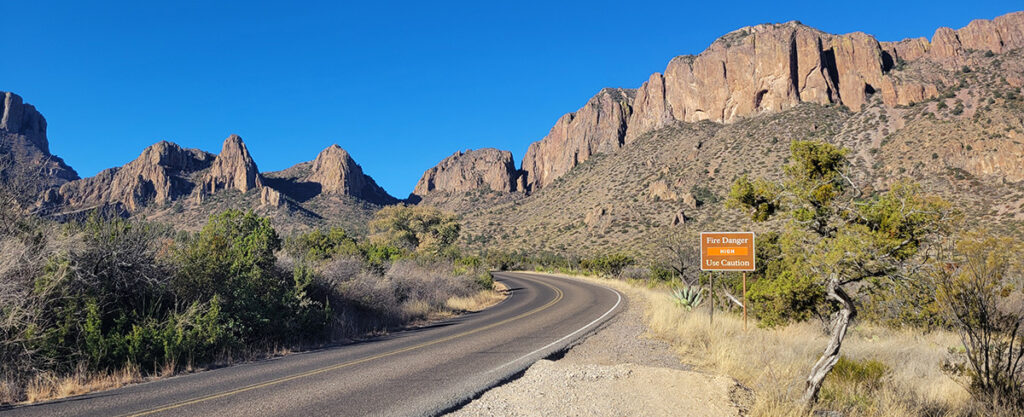
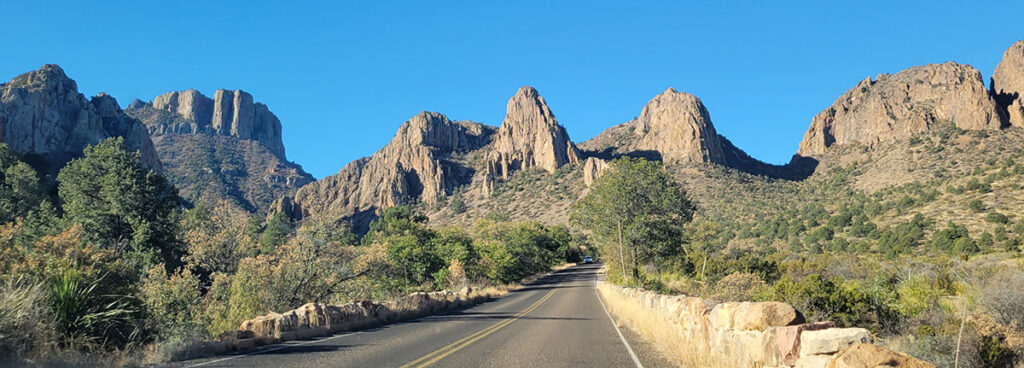
The Lost Mine Trail is 4.8 miles out and back with an elevation gain of 1,145 feet. I knew going in that I wasn’t going all the way to the top, so I just went as far as necessary to get some really great views. Then I found a nice place to hang out while I waited for Mark to return.
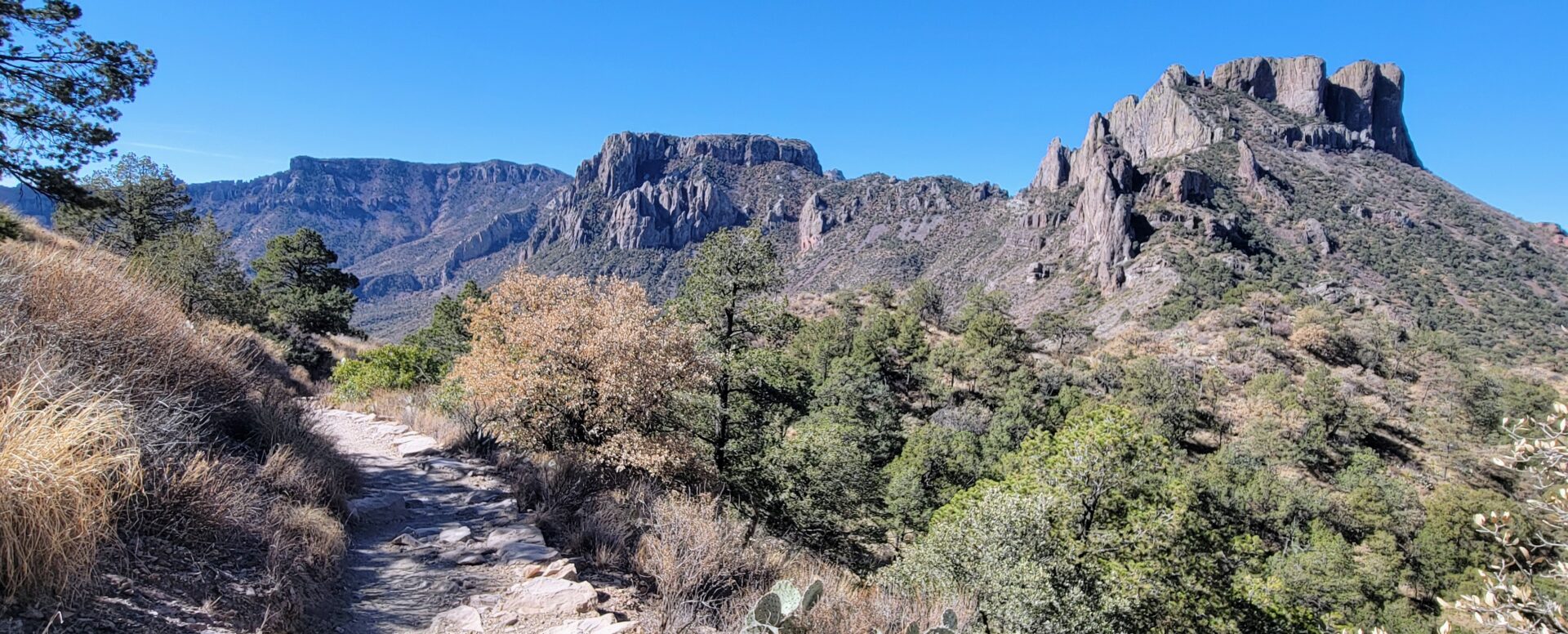
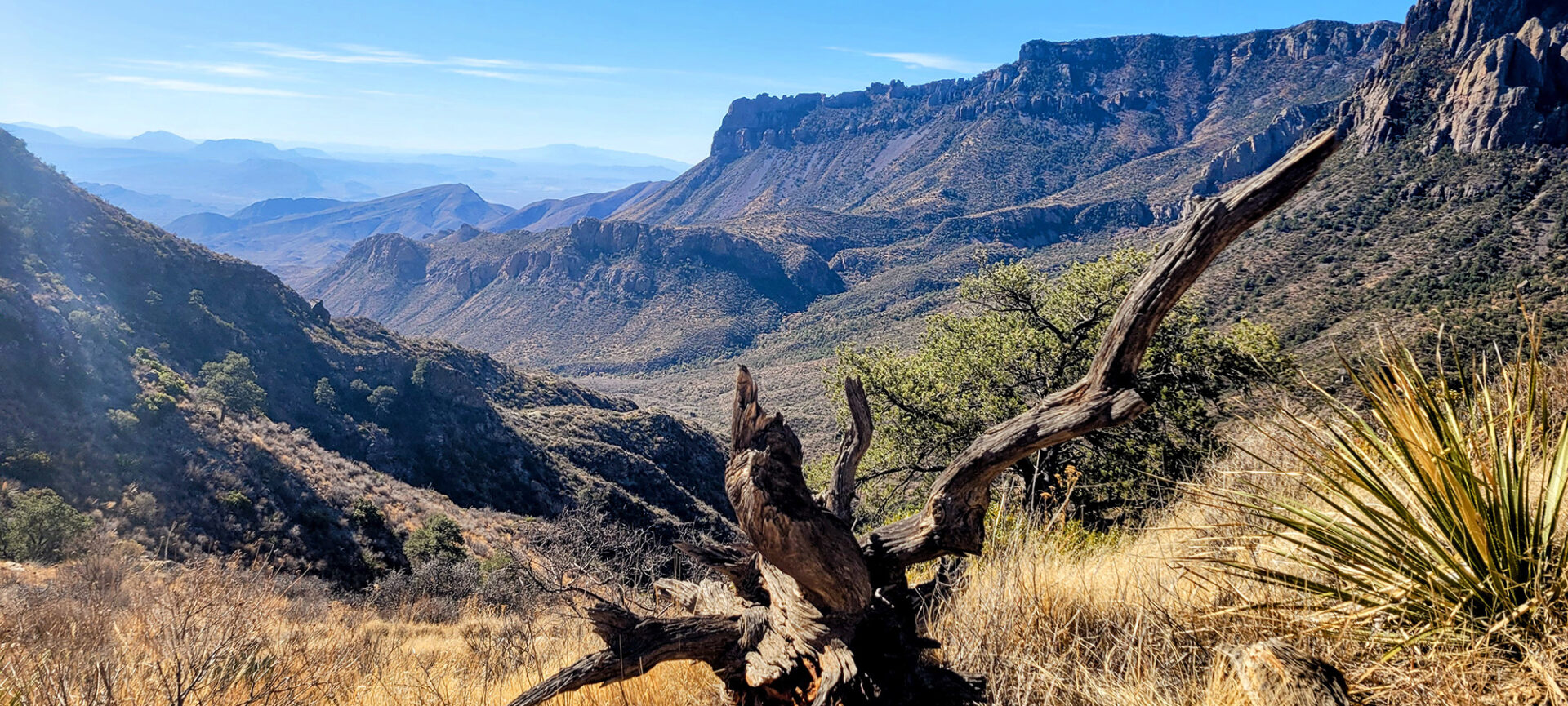
After The Lost Mine Trail, we drove to the Chisos Basin and walked the easy .3 mile Window View Trail.
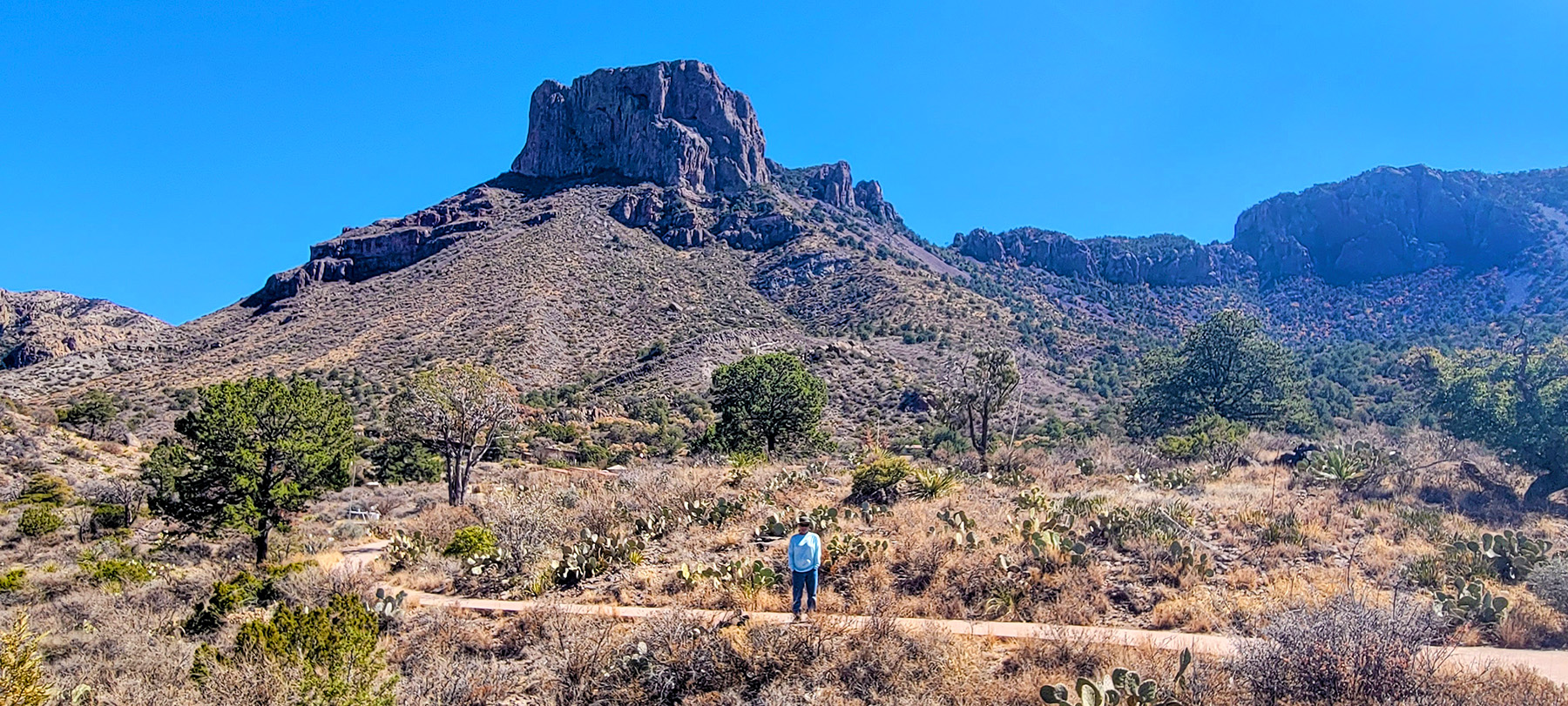
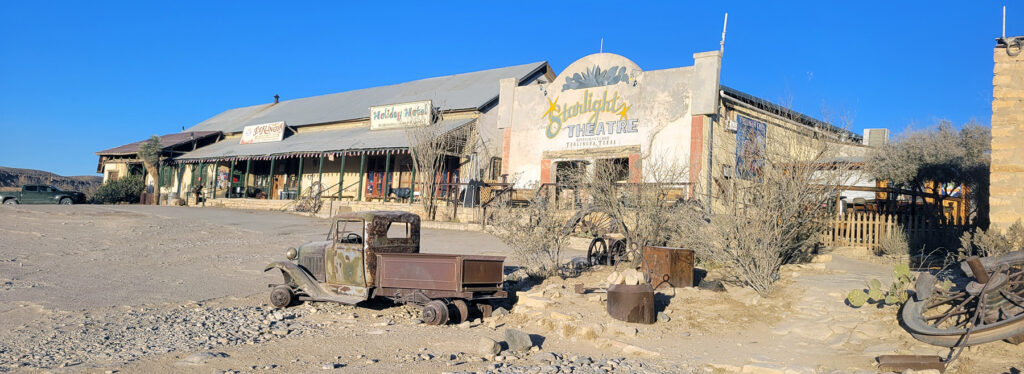
That day we headed back to our casita a little early so that we could get cleaned up for a nice belated anniversary dinner. Our anniversary had been 2 nights prior, but when we showed up at the one “nice” restaurant in Terlingua (The Starlight Theatre) that night, we discovered you had to get there early and get in line or you’re out of luck. So, this time we arrived about 45 minutes before they opened and we were the 2nd group in line.
When I say it is a “nice” restaurant, I mean that it has a cosmopolitan menu with prices to match. But don’t expect fancy decor or tablecloths! Actually, it was the old-west rustic vibe that made a visit to the restaurant worthwhile. The food was nicely presented, but in my opinion, it wasn’t worth the price.
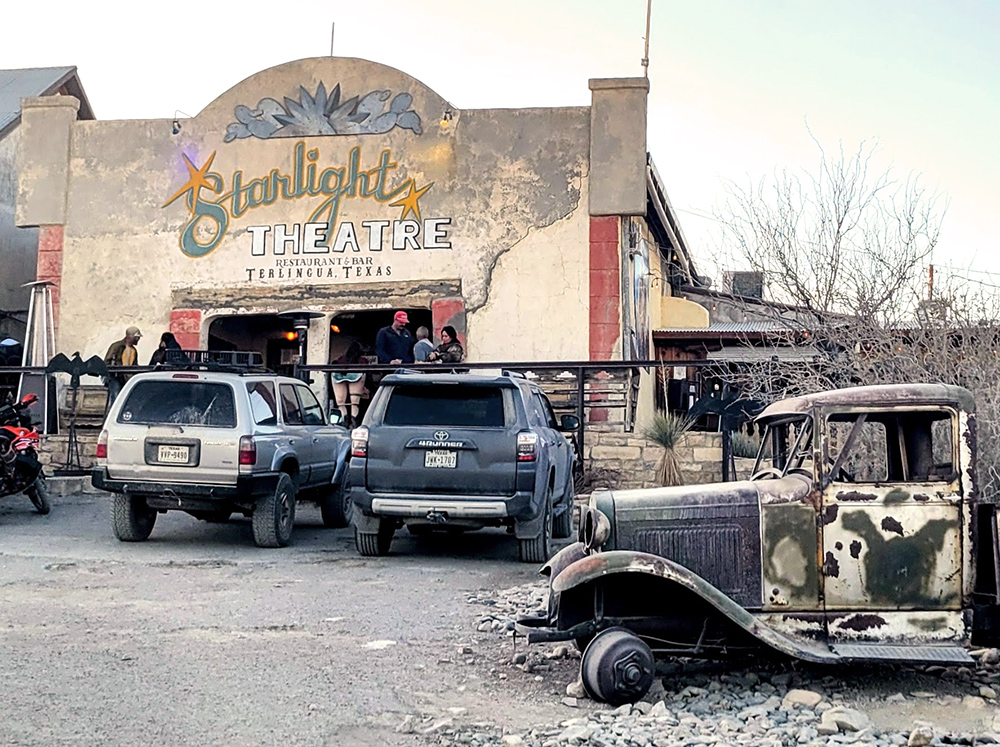
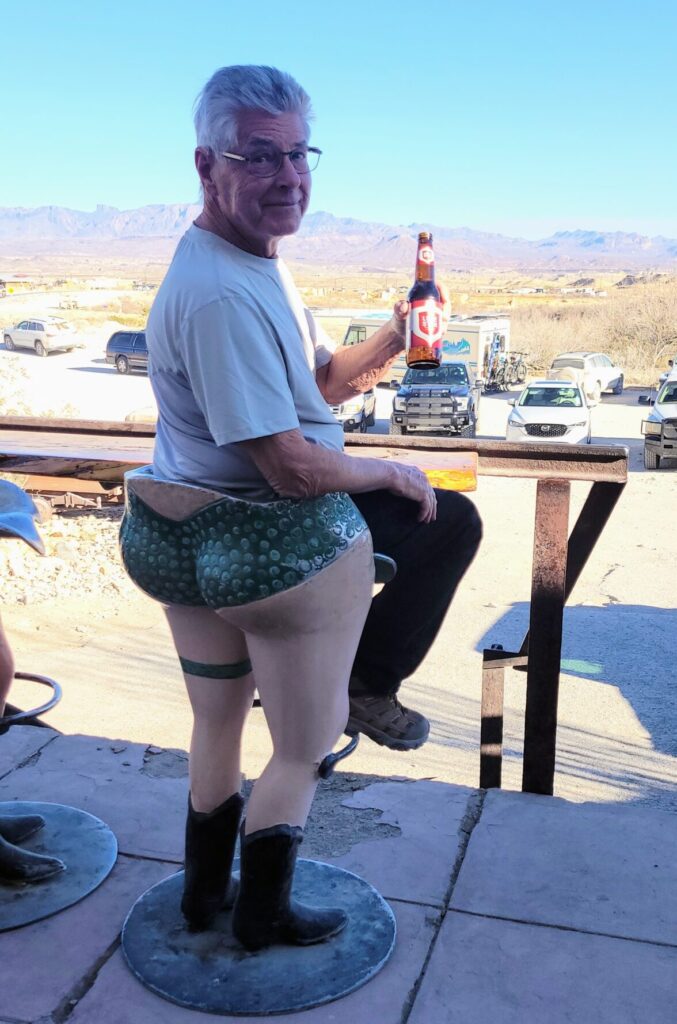
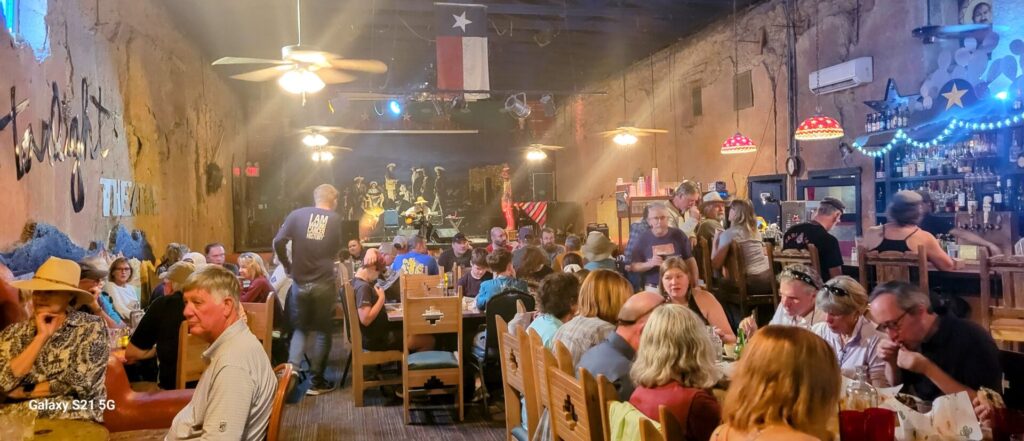
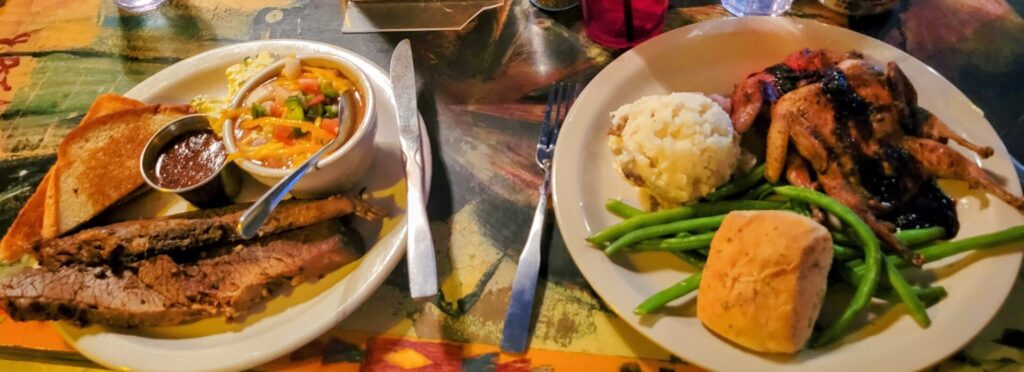
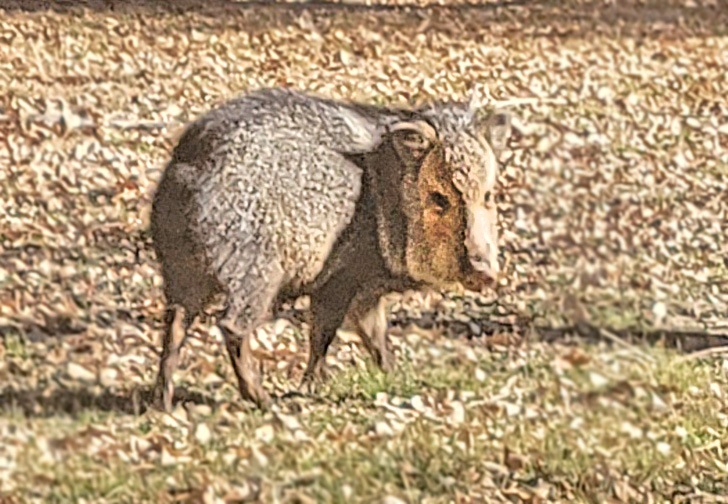
Our final day in Big Bend started wtih a stop at Terlingua Cemetary to get a few more photos in early morning light, and then we headed into the park to Daniels Ranch Road near the Rio Grande Visitor Center. I had read that this location is a great birding spot. I managed to add two more birds to my life list, we had a visit from a wild boar, and I bought a Mexican-made, wire-wrapped roadrunner in the local “shop”.
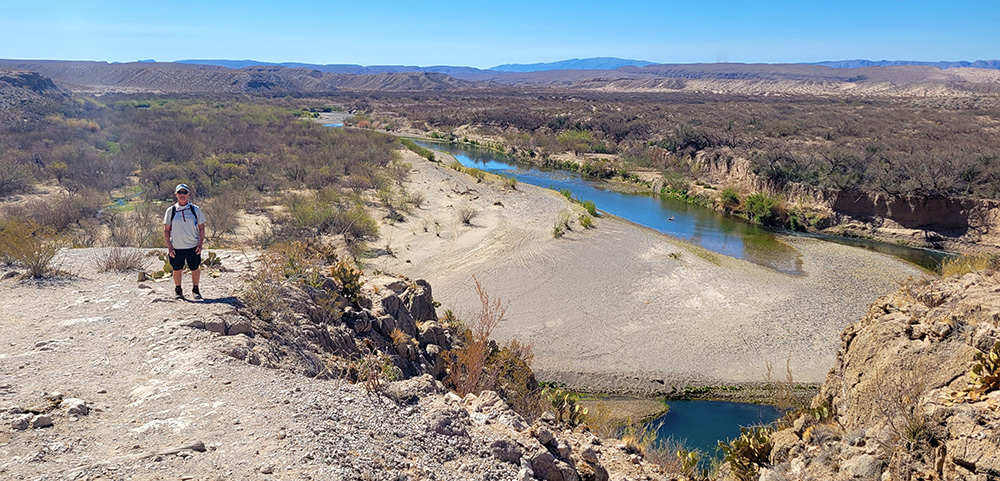
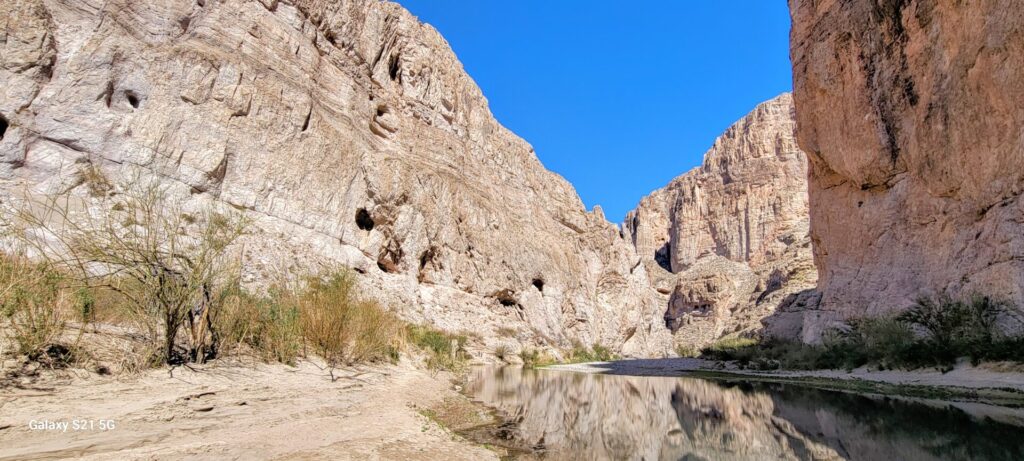
Our final destination inside of Big Bend National Park was the Boquillas Canyon Trail. As the name suggests, the trail led down to a canyon on the Rio Grande. It was nice, but it wasn’t nearly as spectacular as the Santa Elena Canyon. As we started out on the trail, we came across a Mexican on horseback who tried to not only sell us tchotchkes, but also some home-cooked empanadas that is wife had just made. I really wanted to try one of the empanadas, but I decided not to risk getting sick the day before our trip home.
Impressions and Tips for Visiting Big Bend
Overall, it was a nice trip. I was bummed about the cold weather at the beginning, so if I had to do it over maybe I’d push the trip back by a couple of weeks and go in March. That would also have allowed me to take the rock hounding tour that I was interested in. However, be forewarned, I was told that March is a very busy month in Terlingua and in the park. April also can be a good month to go, but you might experience hot temperatures. However, I understand the crowds are slightly less than March, rafting is better, and wildflowers are in bloom.
Here are some additional tips that I gathered from my experience there:
- I think a 4 to 5 day trip would be plenty of time for most people to fully explore the area.
- Compare gas prices before filling up, I saw some stations that were gouging people.
- Download any information to your phone that you might need in Big Bend National Park because the cell service there was spotty.
- Once you pick up your rental car, look for supermarkets on the way to Terlingua. The general store in town is very limited.
If you’ve ever been to Big Bend, please consider sharing your tips and experiences in the comments below.