Workaway in Italy – A Cultural Immersion
Heads Up: This page includes affiliate links, which are marked by an “*”. If you click and purchase, I may receive a small commission at no additional cost to you. But rest assured – my opinions are my own, I would never recommend something I haven’t or wouldn’t purchase for myself.
When traveling abroad, a big part of the experience is learning about different cultures. But when you’re a tourist, it isn’t always easy to get a real sense of what it’s like to live in that country. Most people just visit the popular tourist sites and rely on guides or museums to explain the local culture.
After visiting Italy five times, my husband and I both wished we could experience what it’s like to live there. We decided that we wanted to move to Italy for a year, but life circumstances have kept that from happening. Also, I wondered if we moved there, whether it would be difficult to integrate with the locals. So I did some research in hopes of finding a way to have a meaningful cultural exchange without having to uproot our lives. I was thrilled to find Workaway.info which provides a way to do this at very little cost!
A “workaway” is an arrangement where you live with a host family for an agreed upon amount of time, and in exchange for free room and board you provide help to the host. So, after doing a 2 week workaway in the U.S. as a trial run, I started searching for hosts in Italy that I thought would be a good fit for me.
The first thing I noticed is that there are a lot more workaway hosts in Italy than in the U.S. Here’s a comparison: Florida has a population of over 22 million but currently only has 40 hosts on workaway. But Tuscany, Italy, with a population of only 3.7 million, has over 500 hosts! So, that was good news for me! I narrowed my search by focusing on Northern Italy since I wanted to travel in August and September when it’s really hot at home in Florida. After looking through hundreds of host profiles, I decided to contact 3 of them and the 2 below replied.
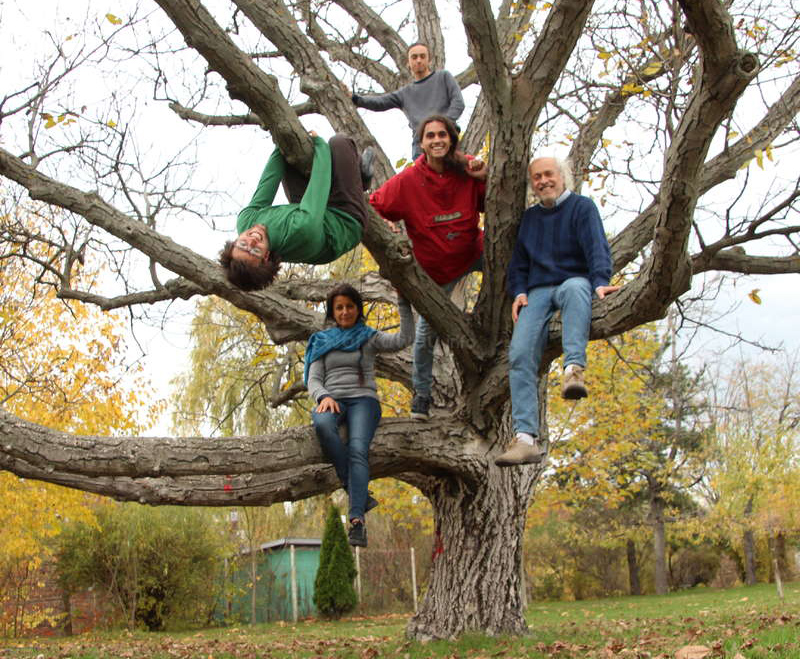
One host family lives in a large house with extended family and others living with them. In total, there were 6 adults and 3 children living there. One thing that drew me to this host profile was the photo of the couple and their 3 adult sons sitting in a big tree. That spoke to me for some reason. Also, I liked the idea of experiencing a multi-generational Italian home. And the work included gardening (which I love) and possibly helping in a ceramics studio (which I wanted to try).
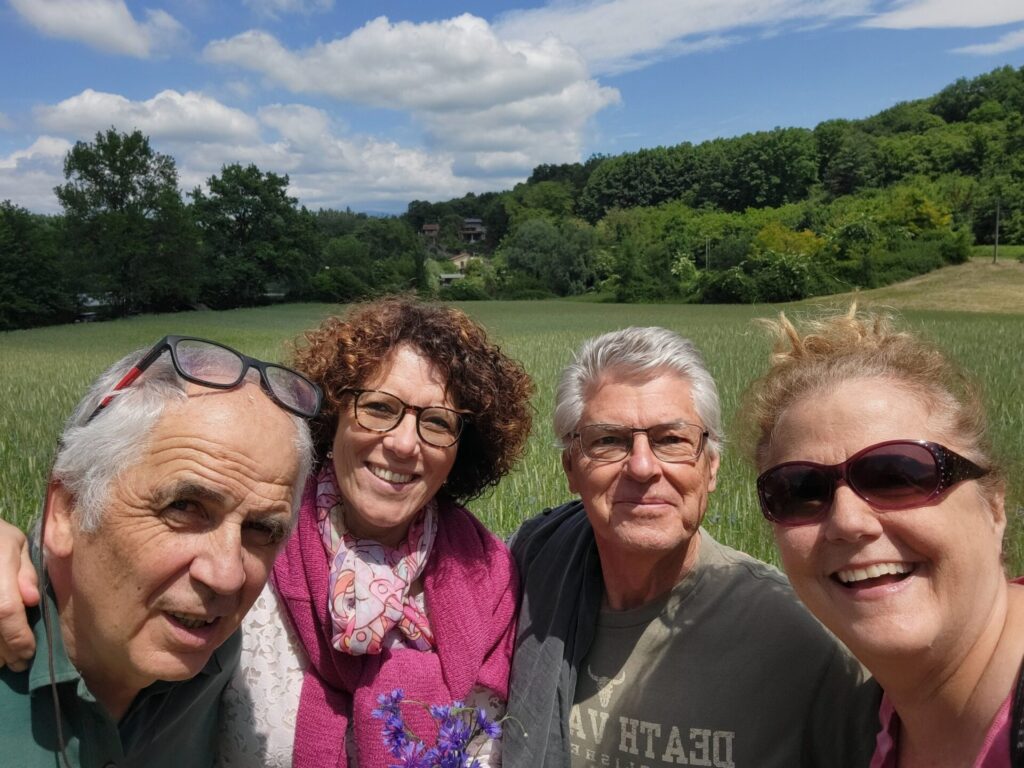
The other host was a 60ish year old couple who primarily wanted someone to speak English with them, but it also included working in a small garden. Again, I was drawn to the profile photo – something about their picture made me think that I’d want to be friends with them. However, this host was new and didn’t have any reviews which made me a little leary. (The other host had lots of 5 star reviews.) But I decided to go with my gut, and reach out to them.
Over the course of several weeks I had a video call with each of the two couples that accepted me. And we arranged my travel dates so that I could spend two weeks with one host and then go from there straight to the other host. And after planning the trip, I studied Italian for the 6 weeks leading up to my departure. Although I’d studied Italian on and off most of my adult life, this time I was motivated, especially since I was told that the husband of the large family did not want to speak in English! I had taken a few Italian classes over the years, and more recently I had been using Duolingo. And while my vocubulary had grown with Duolingo, I really couldn’t speak Italian except for very short, basic sentences. So I did some research and decided to try a audio based app. I settled on Pimsleur* and studied one to two hours every day. And although I made more progress in those few weeks than I had in the sum of all my previous studying, I was still far from being conversational.
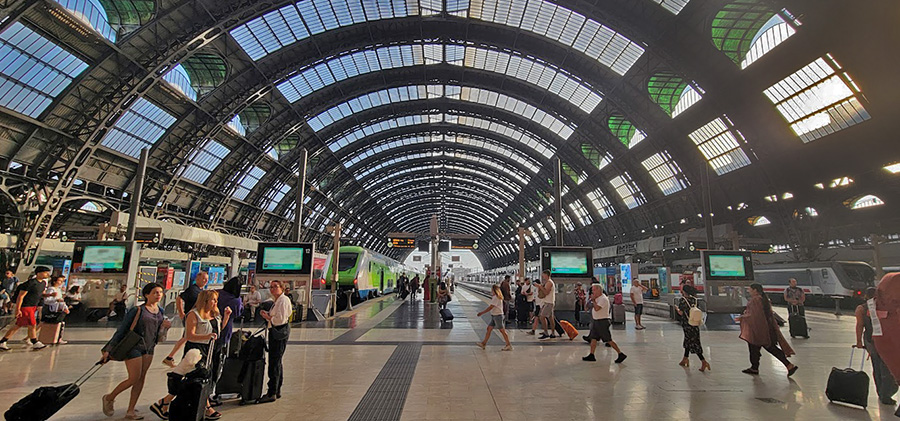
So in mid-August 2024, I flew to Italy alone (my first time traveling to Europe by myself). The first destination was a small town near Brescia, called Cellatica. This was the location of the large extended family, whom I was scheduled to stay with for 2 weeks. I flew into Milan, then made my way by train to the Milan central station, then took a train to Brescia, and then caught a bus to Cellatica where my workaway host was picking me up. It sounds like a lot, but the trip went very smoothly. But to ensure it went smoothly, I did research beforehand to determine the best way to get to the Milan train station, and how to pay for the bus.
Italian Workaway #1: Introduction & Routine
Once I arrived at the bus stop in Cellatica, I messaged the host (Hedwige) to let her know I was there. At first she thought I was at the wrong stop, but after she realized I was in the right place I received the message “Arrivo!” Google translated “Arrivo” to “I arrive”, but I didn’t see anyone. After about 10 minutes she pulled up, and this became my first Italian language lesson of the trip- “Arrivo” is a way of saying “I’m on my way.”
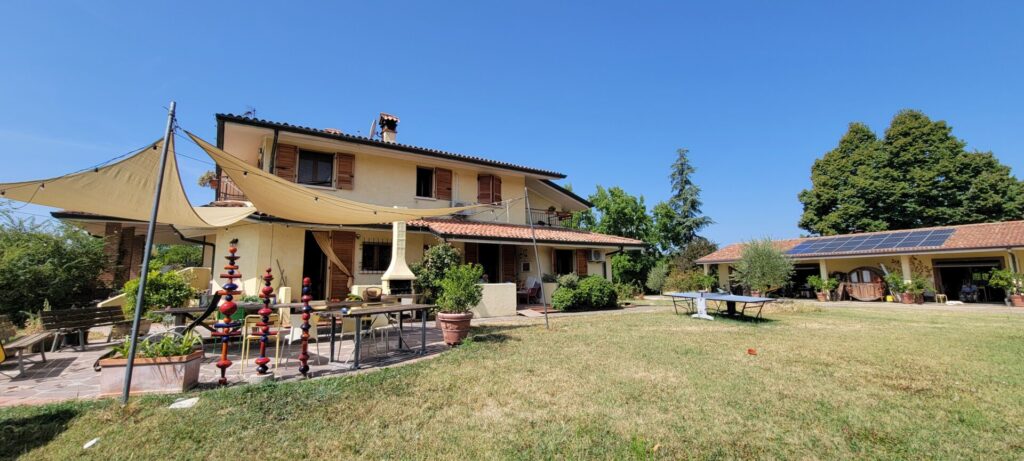
Hedwige is a French woman who had lived in Italy since she married her Italian husband about 30 years ago. She seemed warm and friendly. She picked me up in the family’s tiny car and drove me the short distance to their home. It was a huge, multi-story house sitting on the equivalent of about 5 acres just outside the tiny town of Cellatica. I later learned that in Italy this is a typical “farmhouse”. Apparently most Italian homes are small, with the exception of “villas” and “farmhouses”. Villas are very upscale, while that isn’t generally the case with farmhouses. This house was relatively new by Italian standards – it was built in the 1970’s and this was only the second family to live in it. The house had a huge wrap-around porch on two sides, three large garages, and a partially buried above ground pool. It had lots of windows – all of them with wooden shutters. Upon arrival, I was shown around the house and then up to my private room. The room was sparsely furnished with a single bed and a desk, and plenty of closet space. It was perfectly adequate for me. The best thing about the room was that it had its own private patio/balcony looking down over the front yard. I shared a bathroom with one other person.
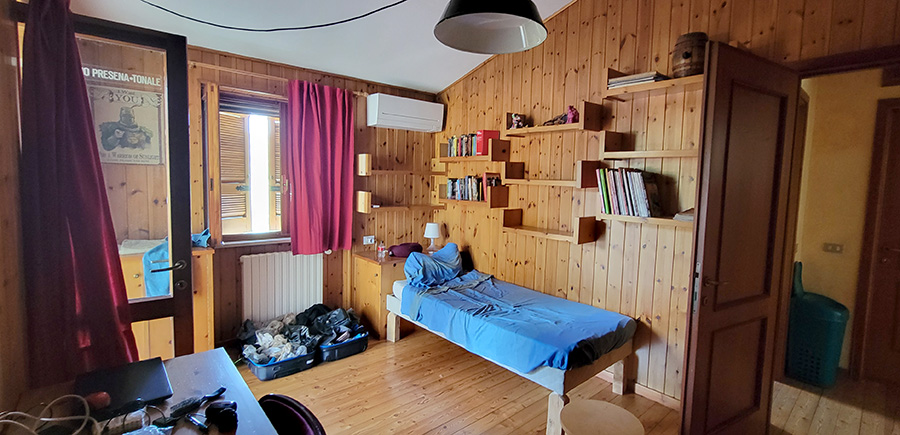
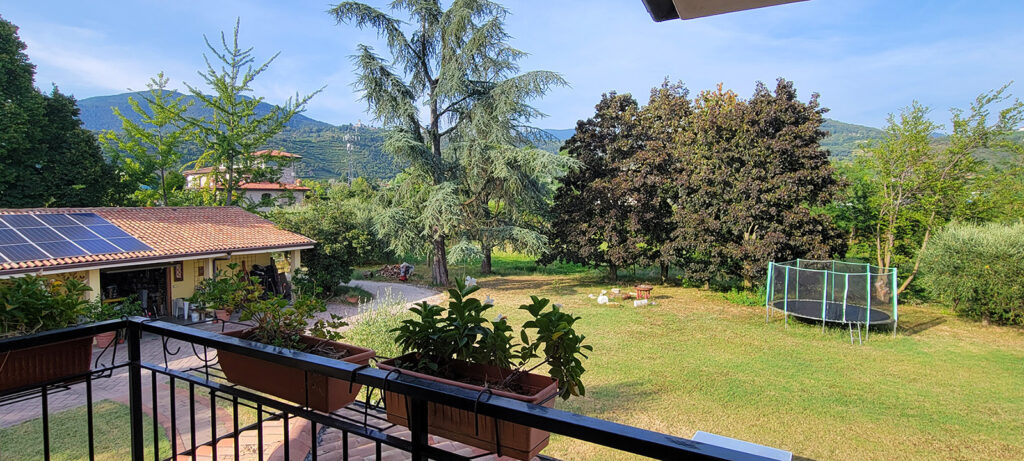
Throughout the course of my first day I met the members of the family who were living in the house which included the husband, Marizio, the youngest son (in grad school), Ilia, Marizio’s Italian mother and Hedwige’s French father. The parents were in their 80’s/90’s and they both needed to be taken care of. Neither of them could walk unassisted and they had both lost some mental capacity. There was a consistent routine every day, which I’m guessing was at least partly due to the parents needing assistance.
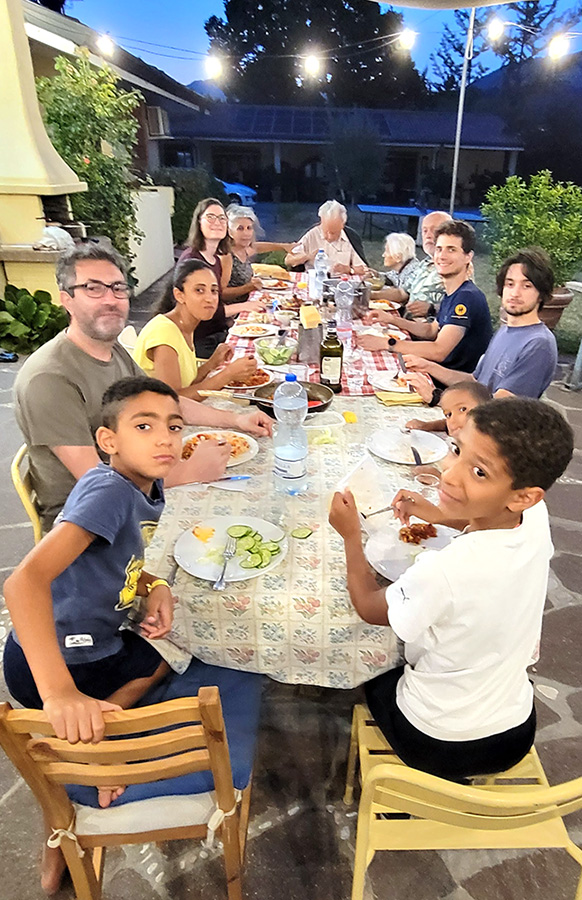
Breakfast was eaten on our own, but it appeared that the parents were usually fed around 8am, which is when I started my chores. A hot lunch was prepared around 1pm and everyone who was home ate together at the kitchen table. Then we were off to do afternoon chores and possibly a swim in the pool to cool off from the extreme heat. I usually took a nap in the late afternoon since I was constantly exhausted. I was not used to that much manual labor, especially without air conditioning. (The main part of the house wasn’t air conditioned, but thankfully my bedroom was.) At around 7:30pm everyone started gathering to help finish preparing dinner and to get it on the table. Most nights we ate outside on the front patio and once the sun went down it was very pleasant.
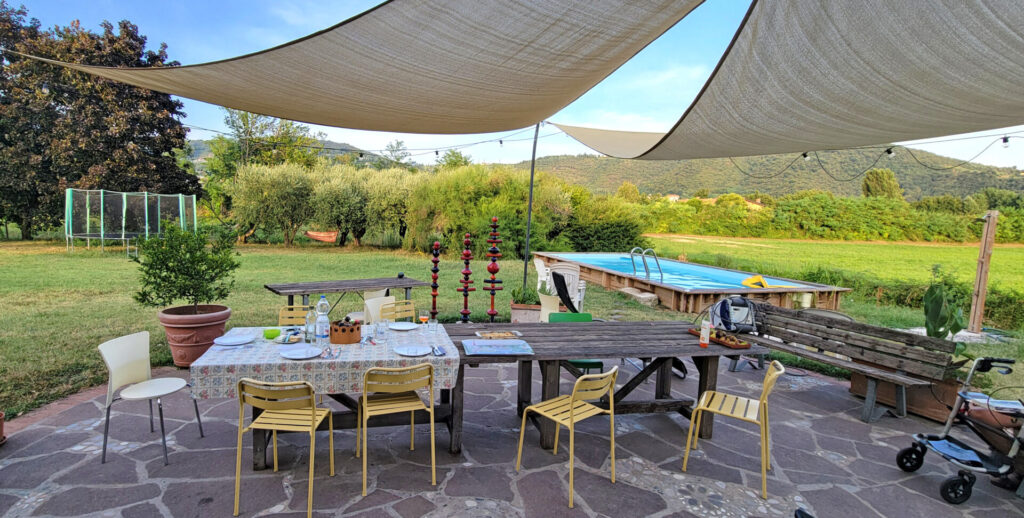
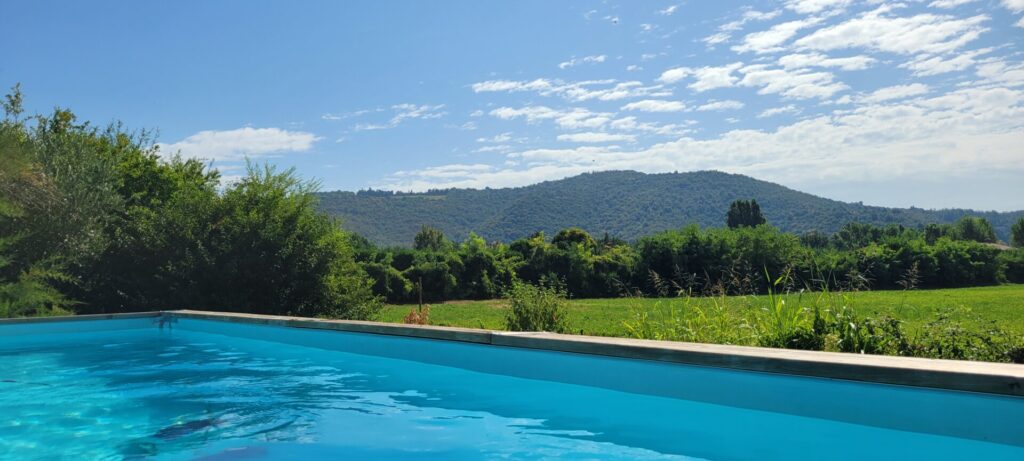
After being there for a few days, I met the rest of the other family who lived in the house. (They had been away on a short trip.) This included a young woman (Moroccan, I believe) and her three sons aged around 7 through 14. This family was taken in by Hedwige and Maurizio nine years prior and had been living there ever since. Over the course of my two weeks there, I learned that Hedwige and Maurizio were involved with an organization that helps women in need. During her nine years there, the woman was able to build a life for her and her children, and happily, when I met her, she was gainfully employed and had just bought a house with her fiance and was moving out soon. This story was only one of many things that made me realize how incredibly caring and generous Hedwige and Maurizio were. Not only did they house this family, but they frequently had to watch the young children. So, at the time I was there, 9 people were living under that roof, not including me. But apparently there was always room for more. In addition to being a host on workaway.info*. Hedwige and Maurizio were listed on the site warmshowers.org. This is a site where people can sign up to host long-distance cyclists as they travel through town. Twice in the two weeks I was there, a couple of cyclists joined us for dinner and camped overnight in the yard. The first two people who came had met on one of these online travel sites and decided to take a trip together. She was from France and he was from Mexico, and the second visitors were a couple from France. At dinners, especially ones with visitors, I was taken aback by all of the different languages being spoken across the table.
Italian Workaway #1: The Work
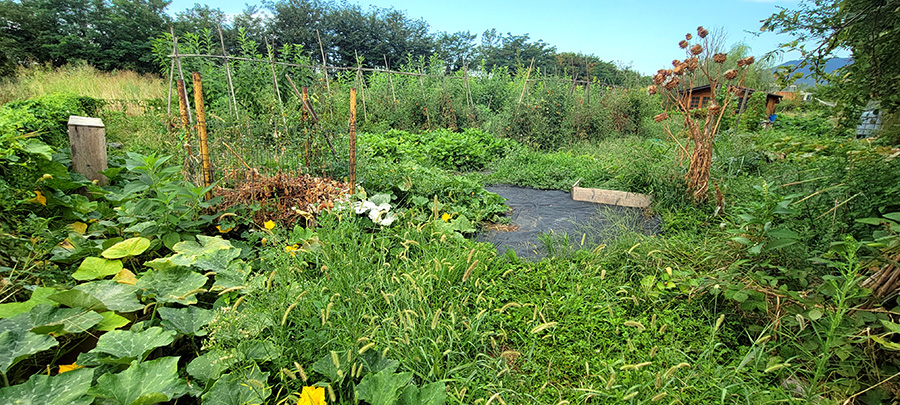
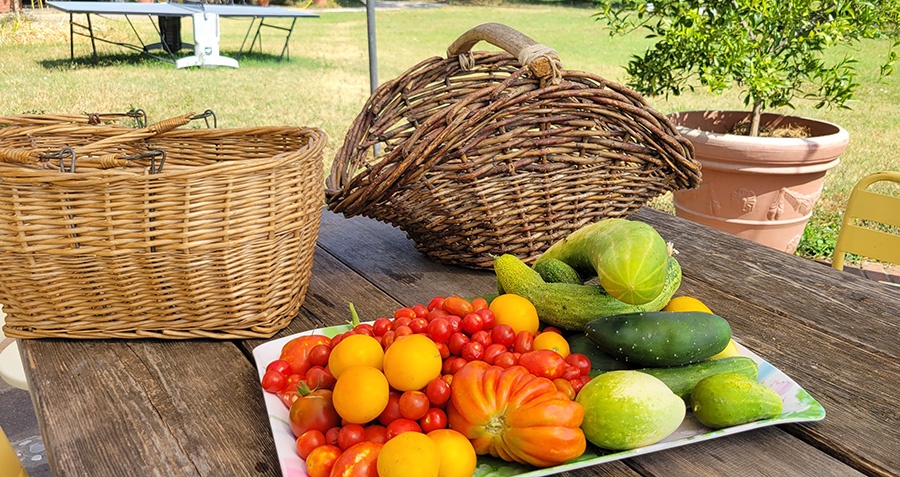
According to this Workaway host profile, I was expected to work no more than 5 hours per day, 5 days per week. I worked more than that. But honestly, if I hadn’t, I would have felt guilty given how hard both Hedwige and Maurizio worked every day. I didn’t work at all on my first day, but Hedwige did go over the list of chores she had created for me. She told me she didn’t care when I did each chore – that was up to me, but she did expect me to work. The one chore that I was asked to do daily was to go into the back garden and pick whatever food was ripe. I was told this was the “small” garden, but it was huge! There were rows of tomatoes, cucumbers, various kinds of squash, pumpkins, celery, green beans, and much more. The big garden was in front of the house and it was a community garden. The family had allowed people from the town to plant there and harvest it themselves.
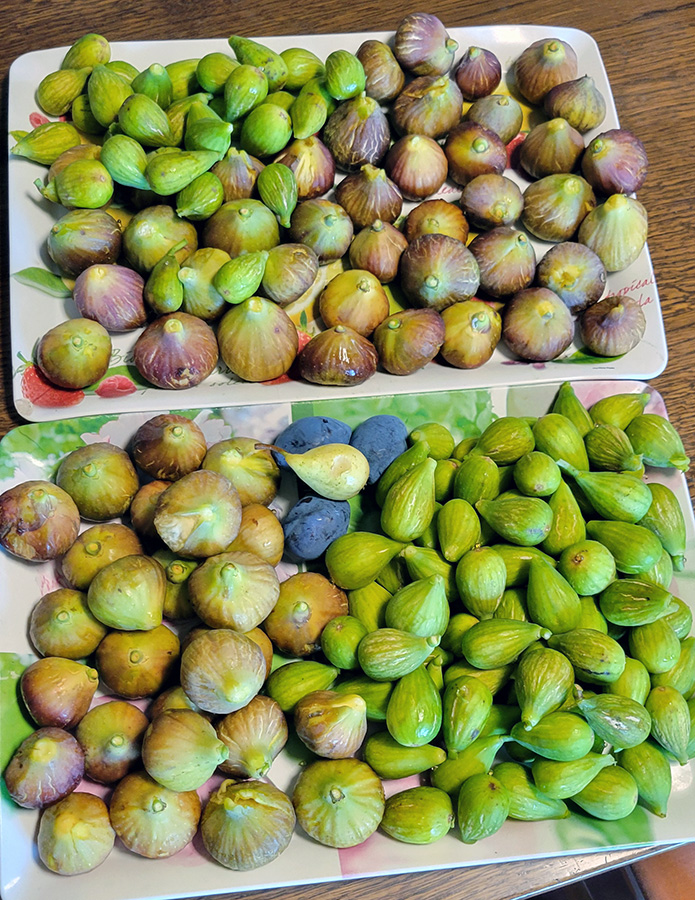
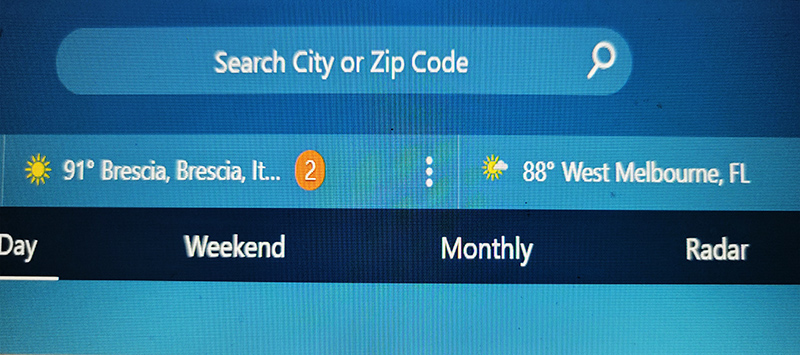
In another part of the yard there were fruit trees and vines. I’m not sure about all of the kinds of fruit they had, but the ones that were producing when I was there included grapes, pears, plums, and figs. There were so many figs! Picking fruit was another one of my daily chores. The number of figs I picked every day was mind boggling! And it was all from just two trees. Working in the gardens was my favorite chore, despite the oppressive heat. I came to northern Italy to get a break from the hot Florida summer, but when I checked the weather, I found that, on many of the days that I was there, it was hotter than it was back at home.
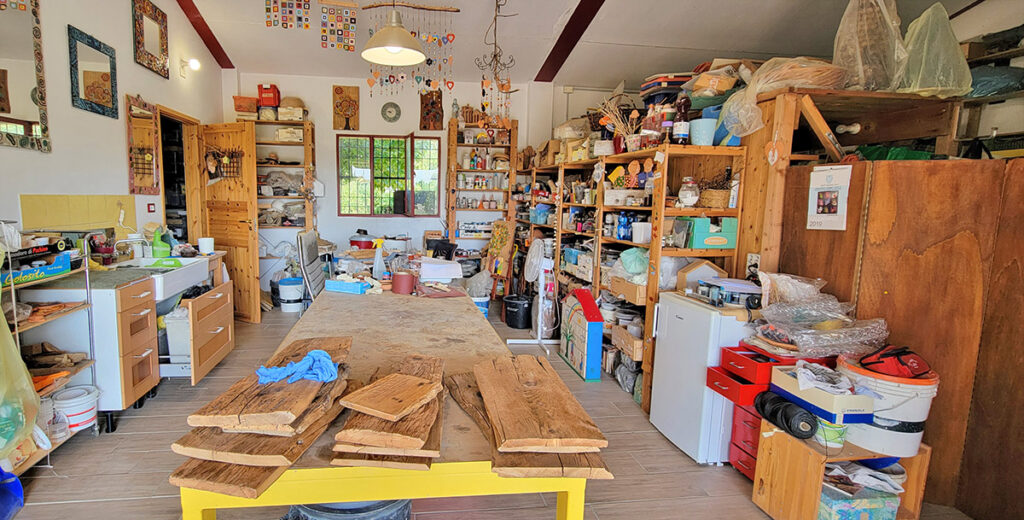
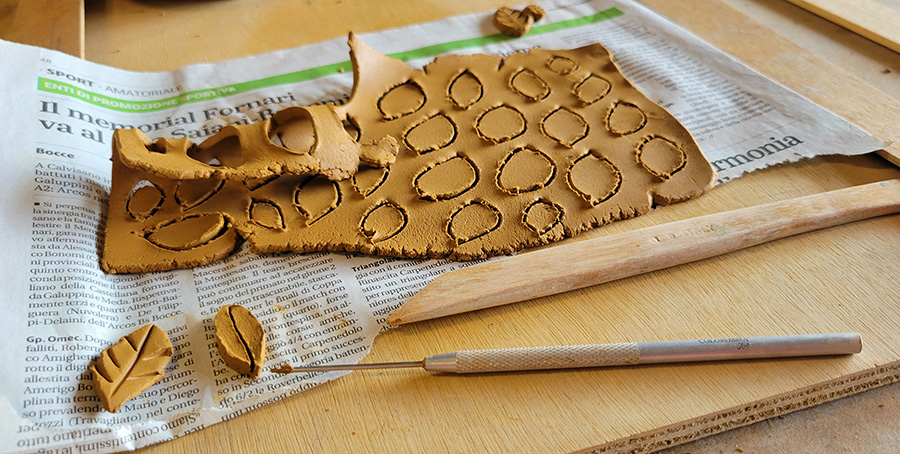
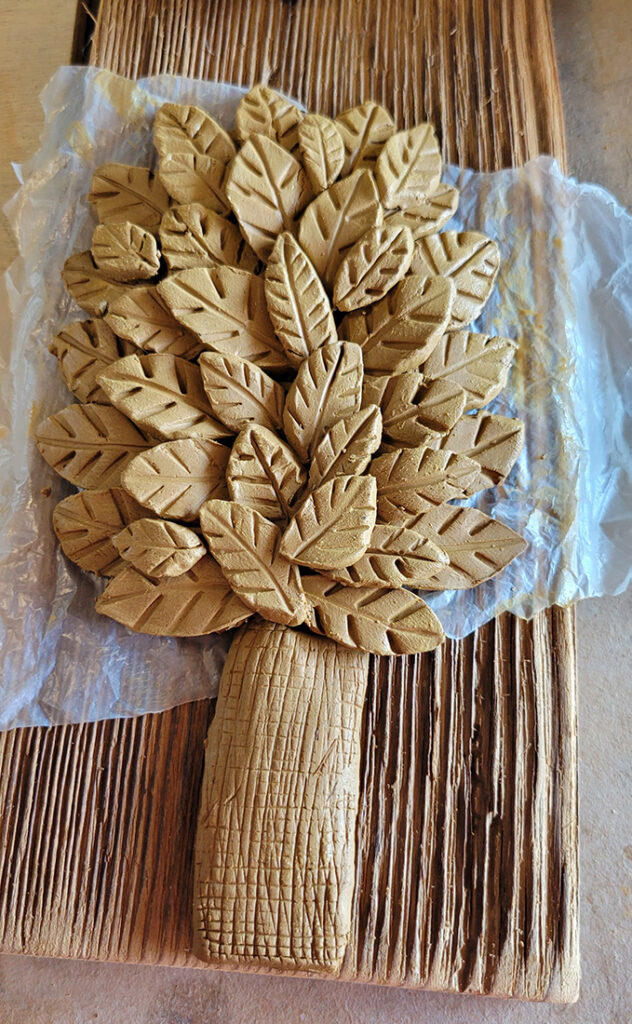
Some of the other chores I did included painting the radiators in the house, cleaning miscellaneous things, weeding between the cracks in the walkways, weeding the garden, scraping out old caulking from around the kitchen sink, helping to wax the tile floors of the wrap-around porch (by hand, on our knees). I only got to help in the pottery studio a few times. Once to clean and wedge the recycled clay and once to sand and clean the old wooden boards used for the background of the ceramic mosaics. Also, on my last day, Hedwige showed me how to make clay leaves by hand and assemble them into a tree.
I realized after the first day of work that my life back at home was very sedentary. I hadn’t thought it was, but the physical exhaustion I felt after only 6 hours of labor told me otherwise. When I wasn’t working or eating, I was mostly sleeping. But after about a week of this routine, the fact that my body was physically tired started to feel good in a way. It’s hard to describe, but maybe in some way I felt a little more alive.
Italian Workaway #1: Days Off
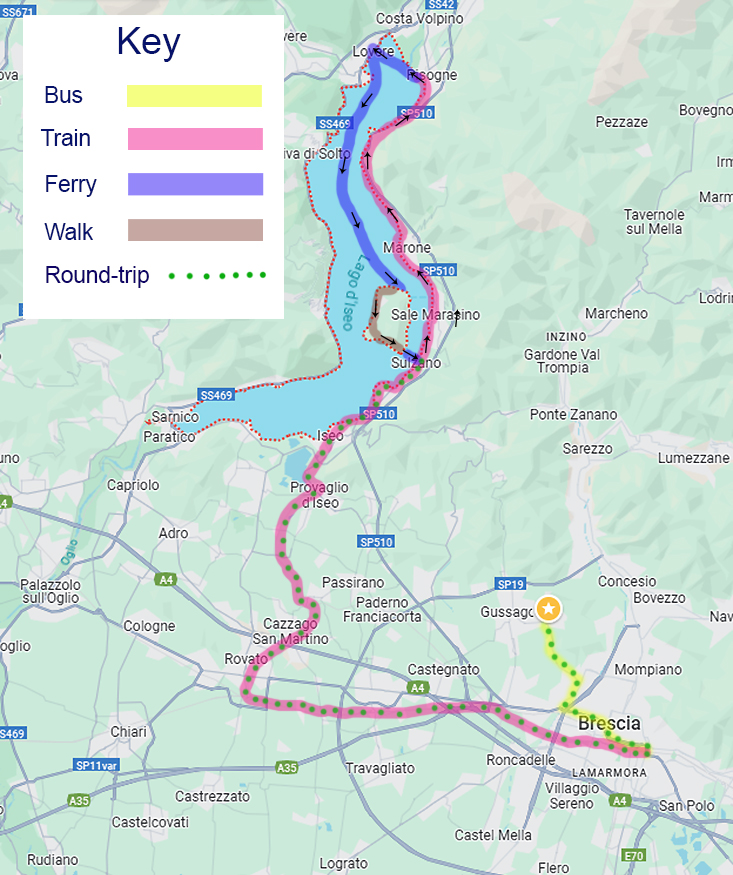
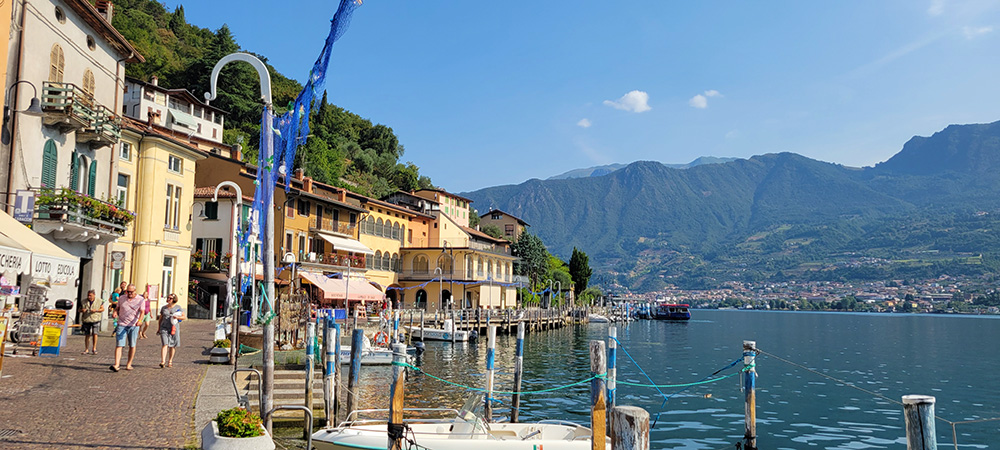
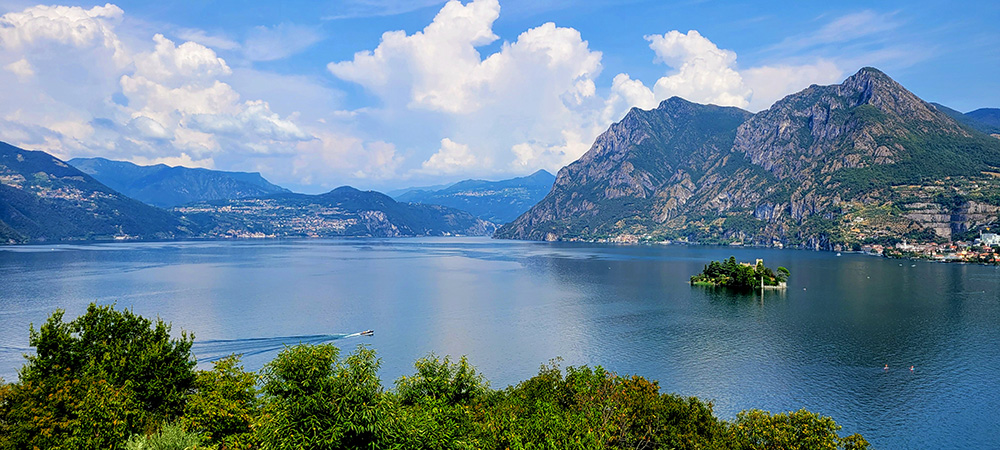
Although I was only supposed to work 5 days a week, I really only took 2 complete days off over the 14 days. On the 2 Sunday’s that I was there, I just worked a little in the garden and picked fruit, but overall I took it pretty easy. But on the days I was completely off work I wanted to do some sightseeing. My first choice of things to see was some of the “lake country”. The house was only about a 30 minute drive to both Lake Garda and Lake Iseo. (Not that I had a car, but it was clearly a short distance.) After getting advice from Maurizio and doing much research, I decided to go to Lake Iseo because the lake was smaller and therefore it would be easier to see more of it in a day. Also, there was a train that ran up along the entire east side of Lake Iseo. My plan was to take a bus to Brescia, then the train up to Pisogne, then a ferry to Lovere then a ferry to Monte Isola (an island in the lake) where I would then take a walk across the island and then catch a ferry the brief distance to Sulzano where I would get the train the back to Brescia and the bus back to Cellatica. I checked all of the bus, train and ferry schedules to make sure it could be done in one day. What could possibly go wrong?! Unfortunately, I found out. It’s such a long story, that I’m creating a separate article about it called “Your a Meticulous Planner – What Could Possibly Go Wrong!” Although I never made it to the north end of the lake, despite everything that went wrong, I did manage to walk around Monte Isola and take in some awesome scenery.
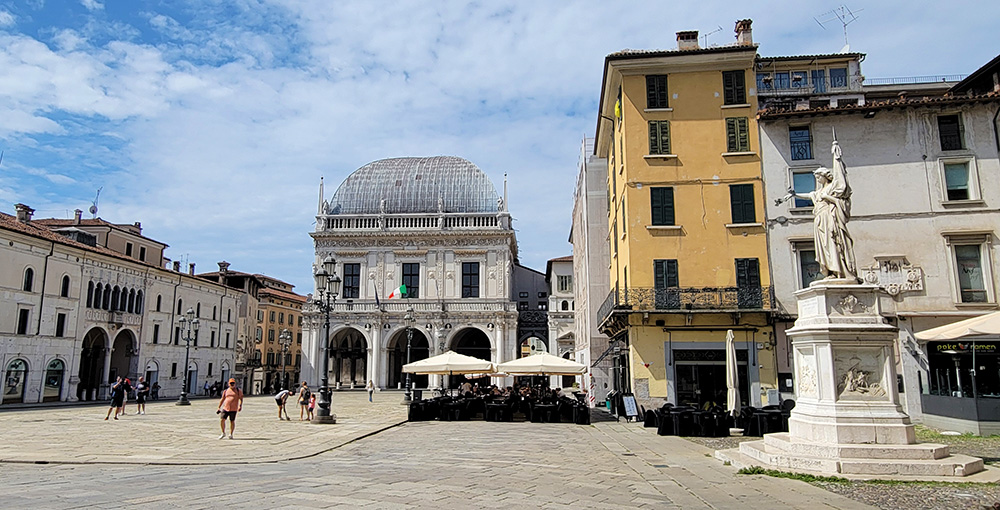
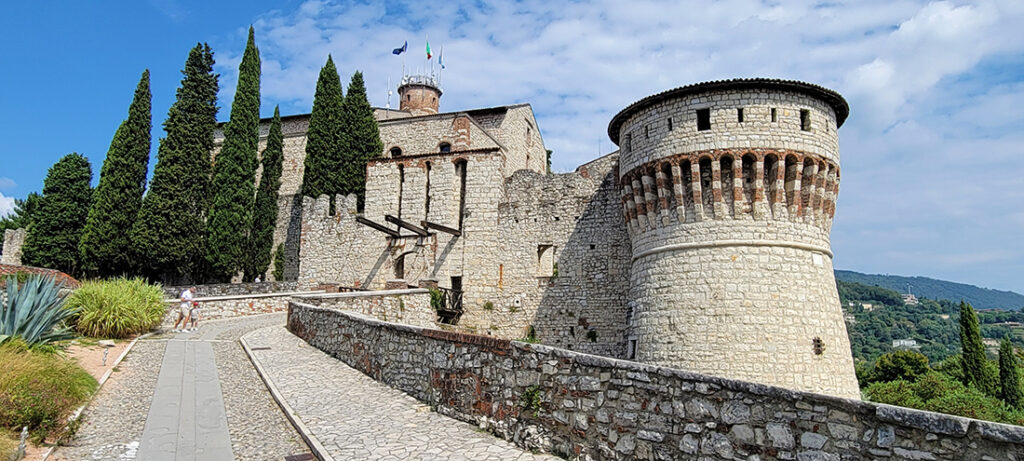
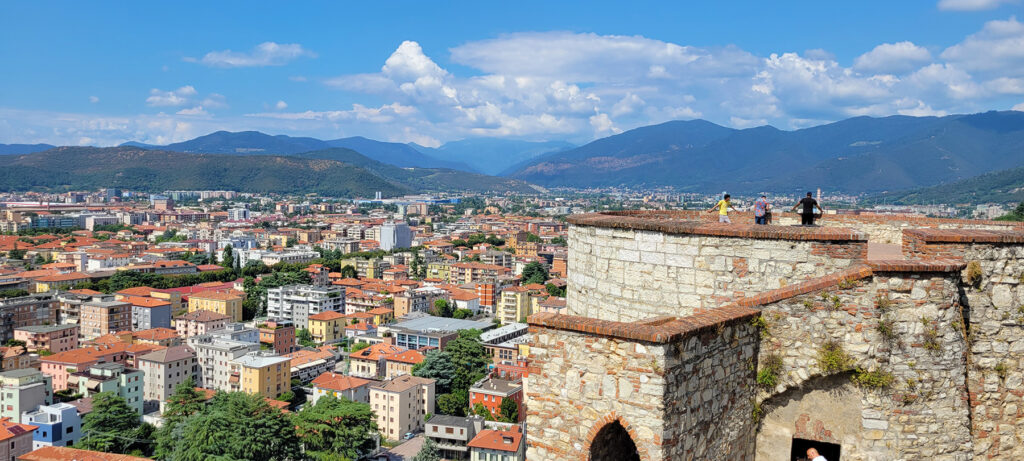
On my other day off I did something nice and easy – I explored the city of Brescia. It was easy because it was just a direct 30 minute bus ride away, and I had already taken that bus the day I arrived. I decided to walk through the older part of town to the Brescia Castle. The first thing that struck me as I walked through town was the lack of tourists. The Italian cities I had visited in the past were tourist destinations, but, for the most part, Brescia was not. I thoroughly enjoyed taking in a “real” Italian small city. At some point during the day it dawned on me that I really loved traveling alone (although I would have preferred my dog to be with me). I did whatever I wanted at my own speed, not having to worry about what a travel partner was thinking; it felt very liberating!
I walked through the historic part of the city on my way to the city’s medieval castle, Castello di Brescia. One of the most interesting things I found in Brescia was that their 17th century cathedral was built next to their medieval cathedral, which is still standing. This is unusual to find since it was common for the old one to be torn down to build the new one.
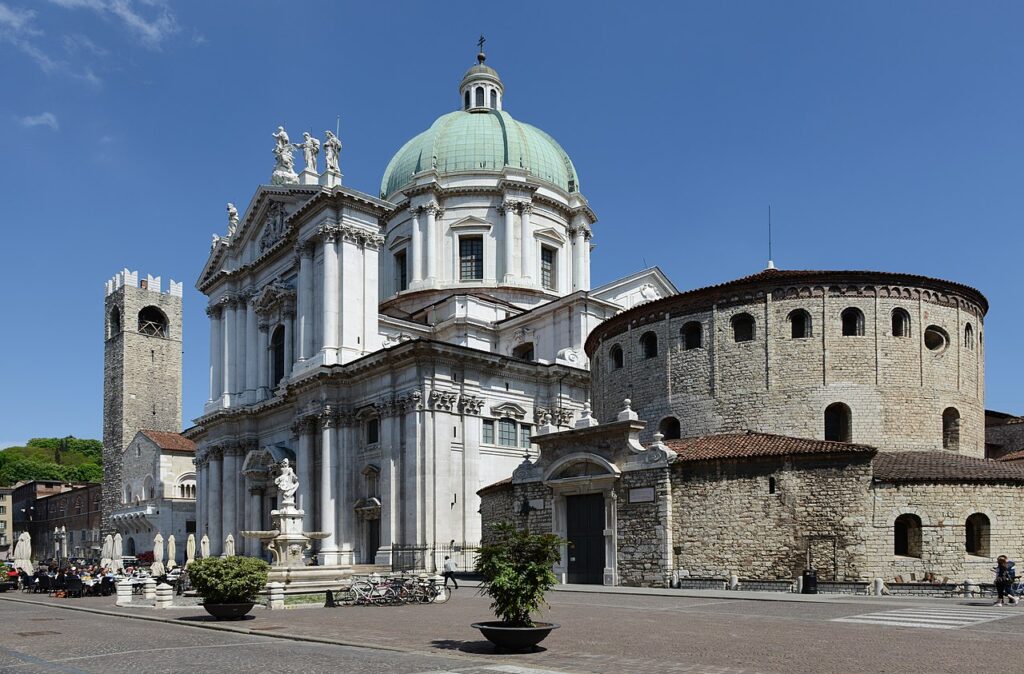
The old cathedral (12th century) and the new cathedral (17th century) of Brescia sitting side by side. (Photo courtesy of Wolfgang Moroder.)
Italian Workaway #1 - Observations and Takeaways
So, after 2 weeks in Cellatica, I considered what I observed and learned from this cultural exchange.
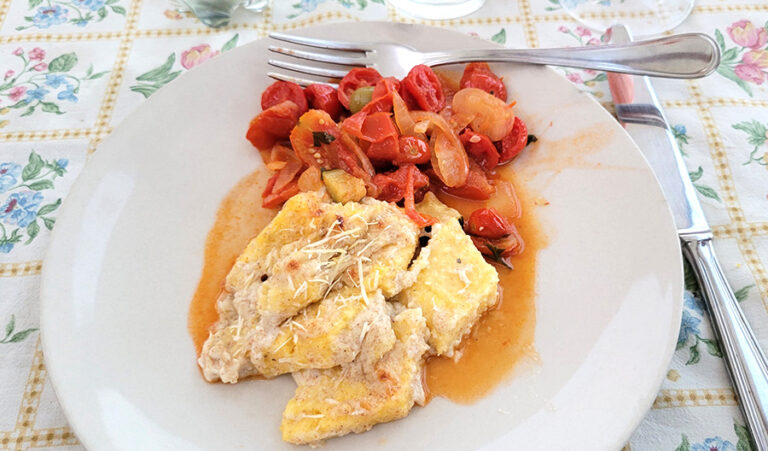
- Food is very important. Eating together is an essential part of daily life. Meals are to be shared and not taken in a hurry. The food is fresh (preferably from the garden) and simple. Most of the family was vegetarian, so typically meals included a selection of vegetables sauteed with fresh herbs, a starch (pasta, rice, polenta, and/or bread, sometimes a salad, and always fresh tomatoes and cucumbers for eating whole. Occasionally there was a sweet dessert after dinner, but there were always fresh fruits, and occasionally homemade gelato (peach or fig) made from fruit picked in the yard and frozen.
- You don’t need to speak the same language to communicate. I was a bit nervous coming into this workaway after being told that Maurizio didn’t want to speak English, but in reality he tried to speak to me in English and I tried to speak to him in Italian. And with the added guests in the house there was a lot of translating going on and always hand gestures being flung about. There was only one instance when a gross miscommunication occurred. I had asked Hedwige how long ago her mother had passed away. Well, for some reason, she thought I was asking when her mother-in-law was going to die. That made for an awkward few minutes until she realized what I was actually saying, and then we had a good laugh!
- Natural products are best. Edwige made her own hand soap, cleaning detergents, and laundry detergents. Chemicals were avoided at all costs.
- There were no strangers; everyone was a welcomed guest. I have a hard time imagining most people in the United States being so willing to welcome strangers into their home, let alone foreigners who may not speak English. And it really impressed me that the family shared their land (the big garden) to allow people who lived in town to grow their own vegetables as a community.
- There was almost no TV and very little computer use. The only person in the house I saw watching television was the grandmother who was not mobile. And it appeared that smart phones and computers were mainly used to communicate or look things up.
- I have a very easy life! As much as I love the idea of growing my own food, having a large property, being involved in the community, and living more naturally; this experience opened my eyes to how much work is involved in sustaining that kind of lifestyle. I would like to do more of this but on a much smaller scale.
As it was time to say goodbye, I was a bit emotional. I felt that I really made a connection with Hedwige and Maurizio and I would miss them.
Although the original plan was to go directly from my first workaway to the second one, I decided instead to spend one day and night in the city of Bergamo, which was on the way.
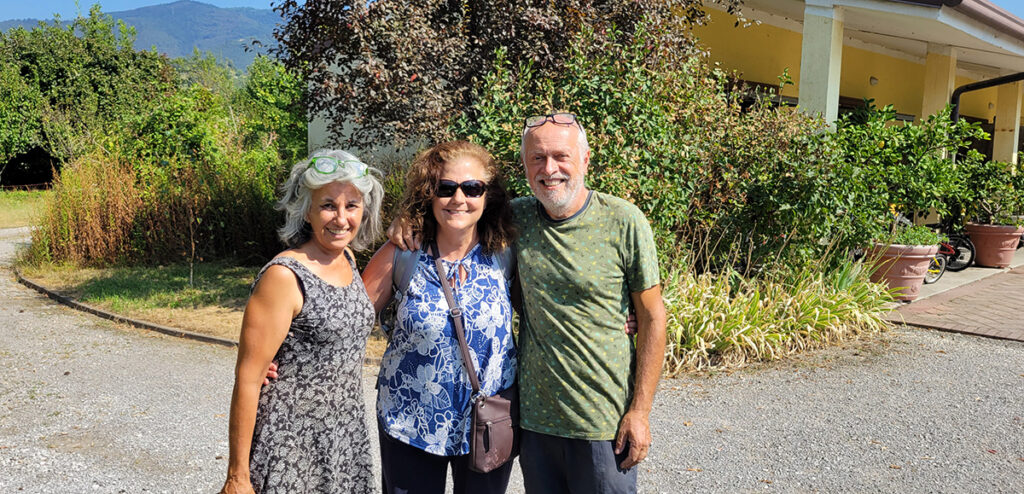
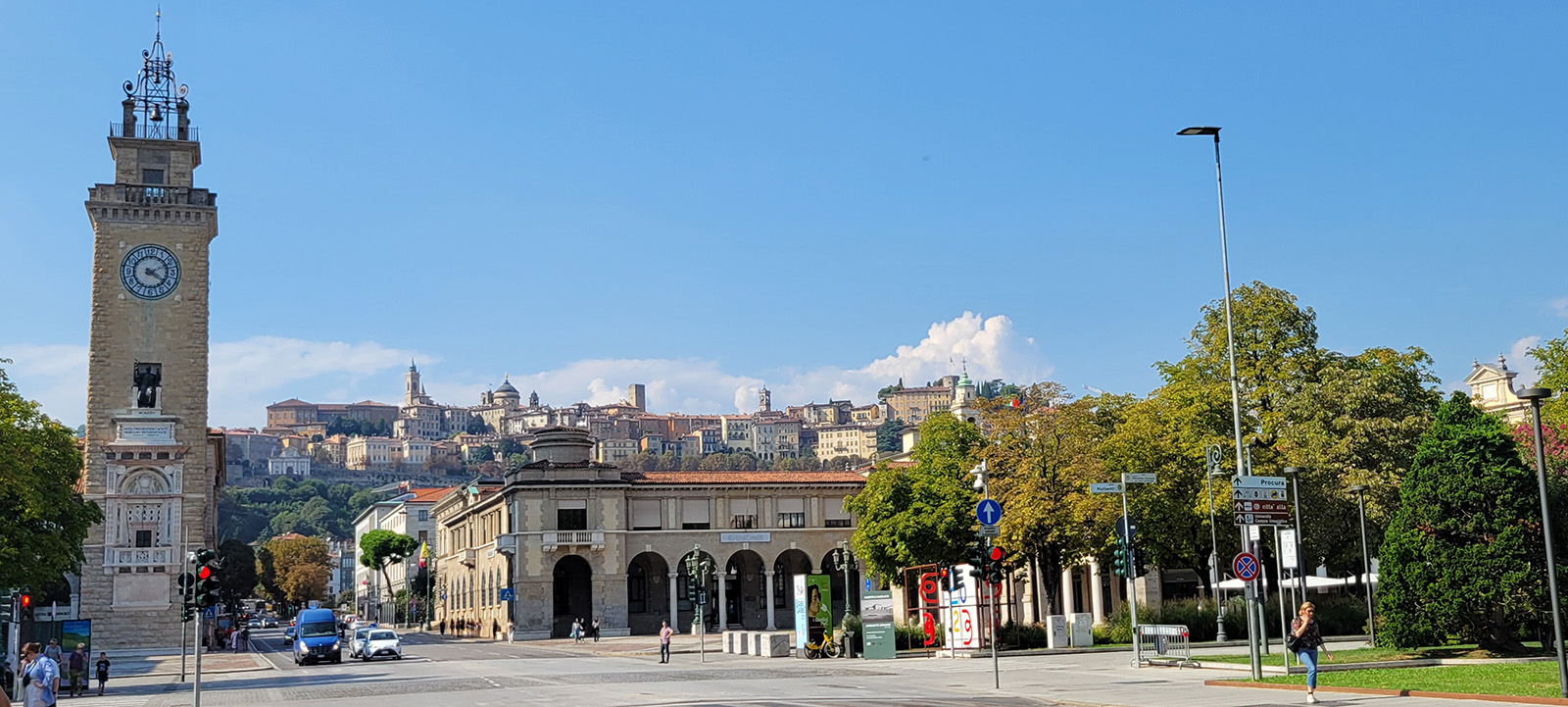
It was an easy train ride from Brescia to Bergamo, and I got an apartment near the train station for one night on Booking.com that allowed a 2pm check-in. So, after checking in, I immediately headed up to the old part of the city, which is walled and sits atop a hill. I walked up the main road heading toward the city where there is a funicular that takes you up into the center.
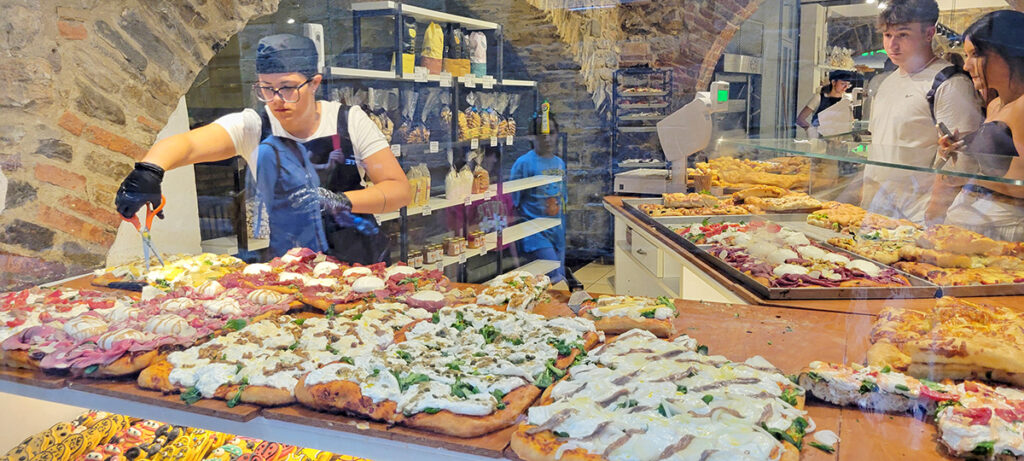
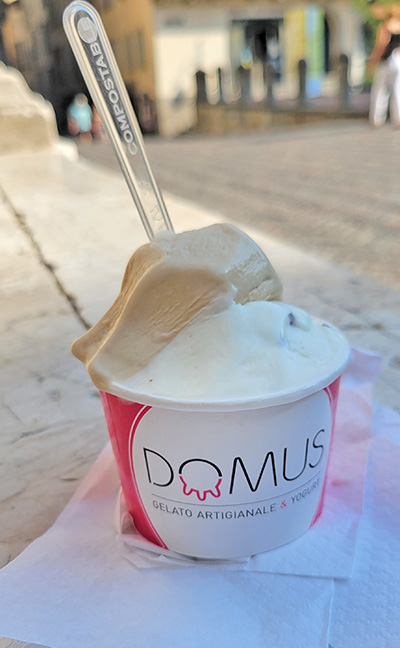
Once I was up in the old city, I just wandered around taking in the sights. I noticed shops selling focaccia loaded with different toppings, and I treated myself to some gelato. Bergamo is known for stracciatella gelato which was invented there, so I felt the need to try it. Honestly, I found it boring. It was just cream with specks of shaved chocolate. It occurred to me that vanilla gelato isn’t common in Italy. Their “plain” gelato is simply the flavor of cream.
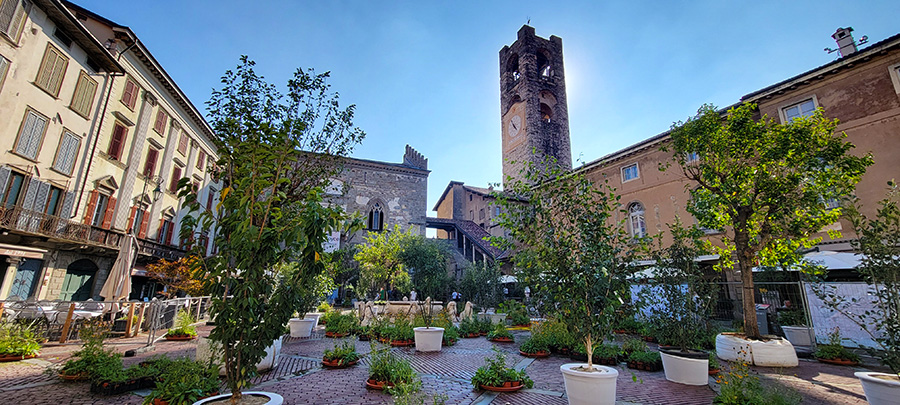
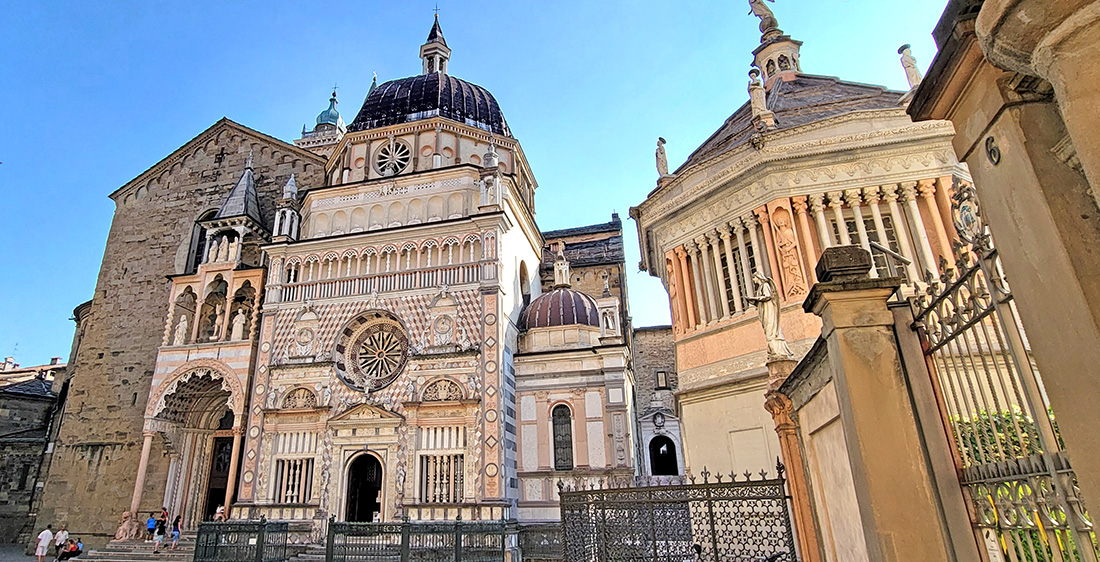
After wandering around for a while, I took another funicular up to the remains of an ancient castle, Torre Castello San Vigilio where I found sweeping views of the city.
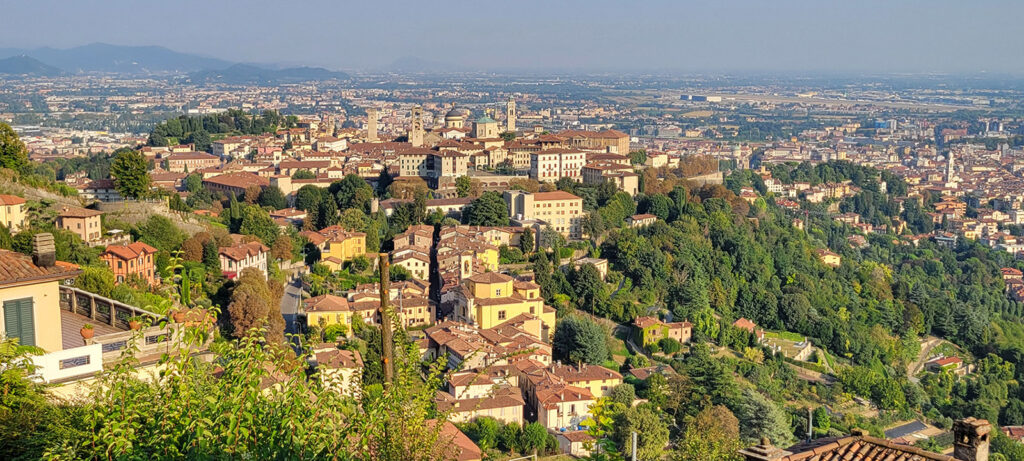
As I was trying to get back to the apartment before dark, I took a bus back, but got off a few blocks early to grab a bite to eat. After being in a vegetarian household for 2 weeks, I chose to get a big juicy hamburger instead of the requisite Italian food. By the time I walked back to my apartment it had just gotten dark, and as soon as I moved off the main street I started feeling a little uncomfortable. And when I got to my street I found about a dozen young men just hanging out, some drinking out of paper bags. No one bothered me, but it was pretty unnerving. I was later told by an acquaintence that the area around the train station was not a good part of town. I thought I was being smart staying there because it was so convenient (just 5 minute walk to the station), but I’ll be more careful next time and be sure to research any neighborhood where I intend to stay.
Italian Workaway #2: Introduction & Routine
I left bright and early the next morning to head to my next workaway. After changing trains twice, I made it to the Ivrea train station where I was picked up by next host, Renza. Renza was very friendly and welcoming and her English was better than I had been used to hearing for the previous 2 weeks. It was just a few minutes drive to her home where I met her husband Gianni. Their home was completely different from my first workaway. It was a small 3 bedroom attached home, with contemporary furniture. Their yard and vegetable garden were small, but their home was an end unit so that gave them some extra room. One of the nicest features of the house was a big glassed in porch that offered beautiful views.
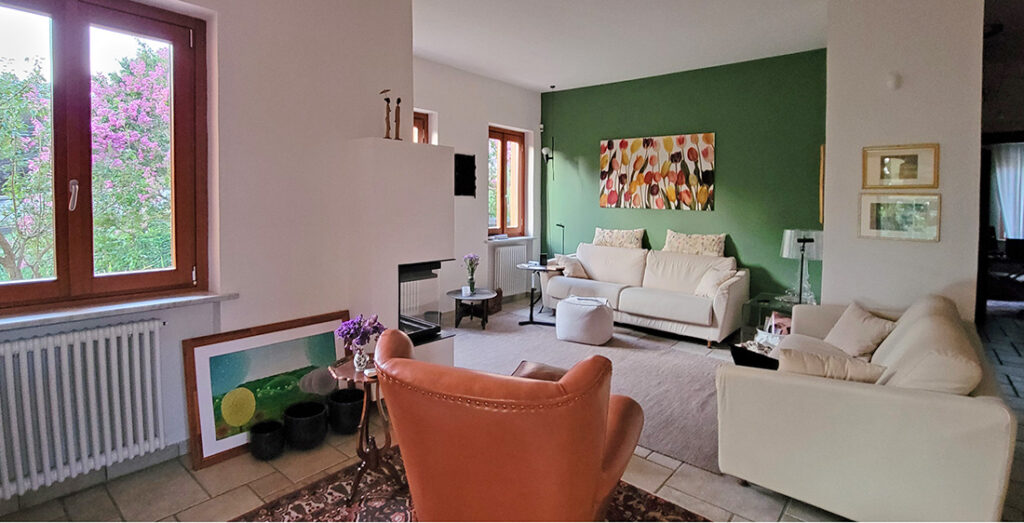
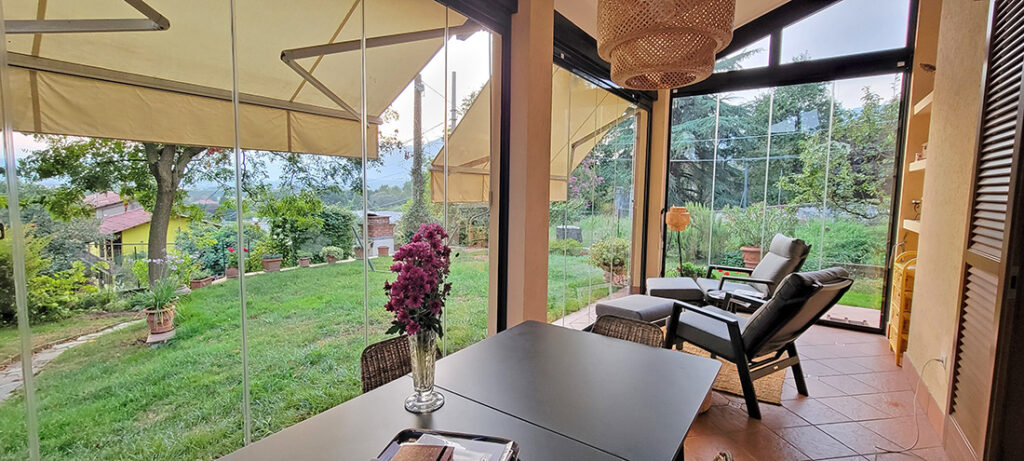
The first thing that my new hosts did on the day I arrived was to sit me down and ask me what my expectations were. Well, after having just completed my first workaway I was expecting something similar, so I said that I assumed that they would give me a list of what they wanted me to accomplish. After some back and forth and moments of awkwardness I realized that they wanted to know what I was hoping to get out of the experience. I don’t recall what my answer was, but after that we just started chatting and everyone relaxed.
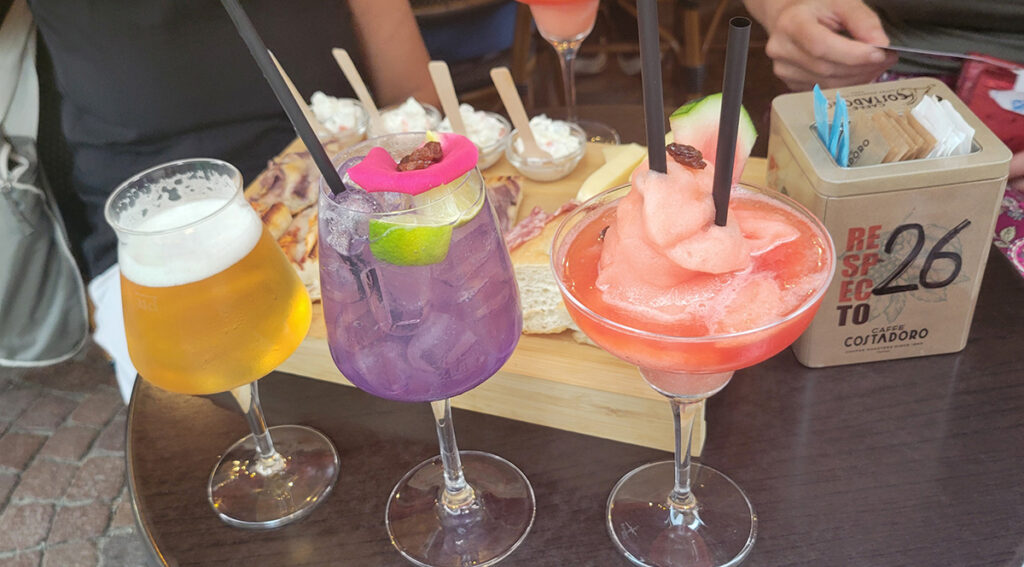
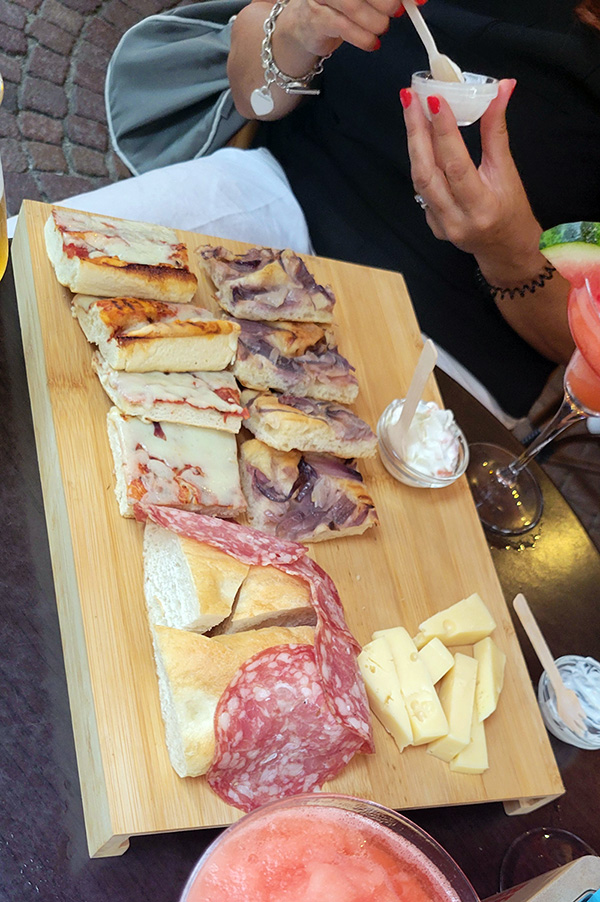
Renza and Gianni both worked, but they were still home quite often. Renza worked flexible hours, and Gianni worked for a company in Turin (about 1 hour away), but he was able to work from home 4 days a week. As was the case with my first workaway, meals were always shared. And here, all three meals were eaten together, even breakfast. In the evenings when we were all at home, we sometimes played cards. The last night I was there they had a “barbeque” at their house with about 14 people. (I’ll talk a little bit about that below when discussing observations.) One night they also took me out with a few of their friends to an “aperitivo”. In Italy an “aperitivo” is like a happy hour, where drinks are discounted, but some bars offered free appetizers with the drinks. Of course, my hosts knew where to go, so the bar they took me to had a nice spread.
Italian Workaway #2: The Work
The ad for this workaway had said that they wanted to practice their English and some help in the garden. But in reality, they just wanted to spend time with me speaking in English. I had to nag them to give me actual work to do. They didn’t even need me to clean because they had a cleaning lady. However, I did force the issue and got to do some weeding, trimming, and picking nuts out of the gravel driveway.
I also wanted to cook for them at least once or twice, but that was a bit tricky because I had trouble finding the ingredients to the recipes I wanted to make. They mentioned that they liked Latin food but their friend who cooked Latin for them made complicated dishes that they didn’t want to go through the trouble of replicating. So, I thought of one of my go-to Latin recipes that is so easy and everyone likes it – chicken chili. Renza took me to the largest grocery store in their town so I could buy the ingredients, and then dropped me off at a second grocery store, but the Latin section in both stores pretty much consisted of just tomato salsa and tortillas. I couldn’t find green chilies, salsa verde, or even coriander! But I saw that there was a Latin grocery in Turin and I knew I was going there on my day off, so I held out hope to get the ingredients there. Meanwhile, I wanted to cook something else for them, so I headed to the can soup aisle for some cream soup that I use to make chicken and stuffing – another easy dish. I couldn’t find the canned soup so I asked someone “Dov’è la zuppa?” Unfortunately, I didn’t know the Italian word for “canned” so I was directed to the refrigerated soup section. So, I called Renza and asked her where I could find the canned soup. She seemed confused and asked what kind of soup I was looking for, I told her a “cream soup”. She then informed me there were no canned soups. “If we want soup, we just make it.”
I gave up on making them anything easy because, apparently, easy ingredients don’t exist in your average Italian grocery store. Except, of course, there was a whole aisle of boxed pasta. But I wasn’t going to make pasta for my Italian hosts, and certainly not boxed pasta! I eventually settled on making a dish that I considered to be Italian – chicken & wine with olives. There were a lot of ingredients, so it wasn’t a quick and easy meal, but at least I could find the ingredients. (Except there was no “Italian Seasoning” I just had to mix the individual spices together.) I made this meal for my hosts one night; they liked it but Gianni commented he could tell it was American. Huh? I was baffled by that at first, but in hindsight, I think it was because the dish was complicated and had a lot of different vegetables in it. I think it wasn’t as simple as Gianni was used to.
So, back to my main task… helping Renza and Gianni with their English. I tried to give them some sayings that they wouldn’t typically learn from a class or an app. Over the course of the week, I tought them sayings like, “it is what it is”, “what’s done is done”, “twist my arm”, “up-side down”, and “right side up”. I also corrected them sometimes, although I was careful not to do that too much. Although they really wanted to work on their English, they did encourage me to practice a little Italian, which I did rather poorly.
One day I accompanied Renza to visit her parents. I sat with her mother in the living room while Renza visited her father in his bedroom. Renza’s mother didn’t know any English, so that made conversation a bit difficult. I mostly nodded and smiled while she talked, or nodded and looked sad if her mother’s tone warranted it. I was actually able to understand a little. She asked me where I was from, which I answered in Italian. Then I thought she asked me how long I was staying with Renza, so I responded “due settimane” which means two weeks. After that she kept complimenting me on how great my Italian was. It wasn’t until the drive home, when I replayed the conversation in my head, that I realized what she had acually asked me was how long I had been studying Italian?! Well, that explains why she thought I spoke Italian so well. I don’t think she would have been nearly as impressed if I had told her that I had been studying on and off for about 35 years!
Italian Workaway #2: My Day Off
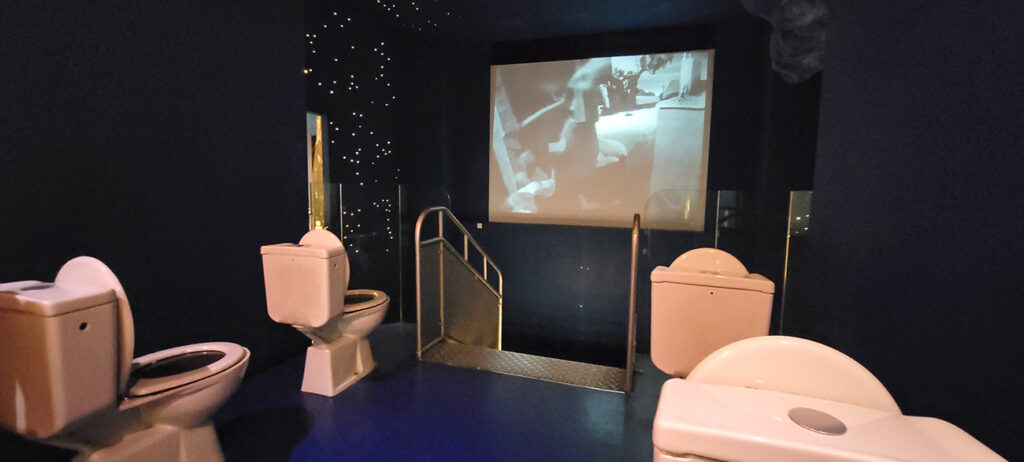
I was only with this host for 10 days, so I figured one day of sight-seeing was plenty. Besides, I was still recovering from the exhaustion of the prior two weeks. Since Gianni goes to work in Turin on Mondays, he graciously offered to take me into the city in the morning and pick me up after he got off work. I did a little research and decided to visit the National Cinema Museum inside the Mole Antonelliana which is a historic building with an elevator that takes you up to a tower with panoramic views. The inside of the building was really cool looking, and I enjoyed both the museum and the views. The museum contained a lot of paraphernalia from what was mostly Hollywood movies, as well as some oddities such as the theater room with toilets as the seats.
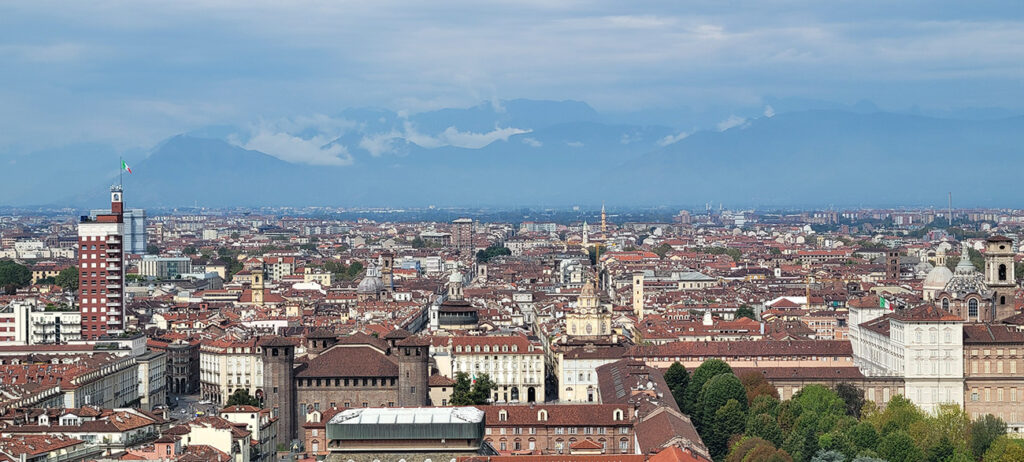
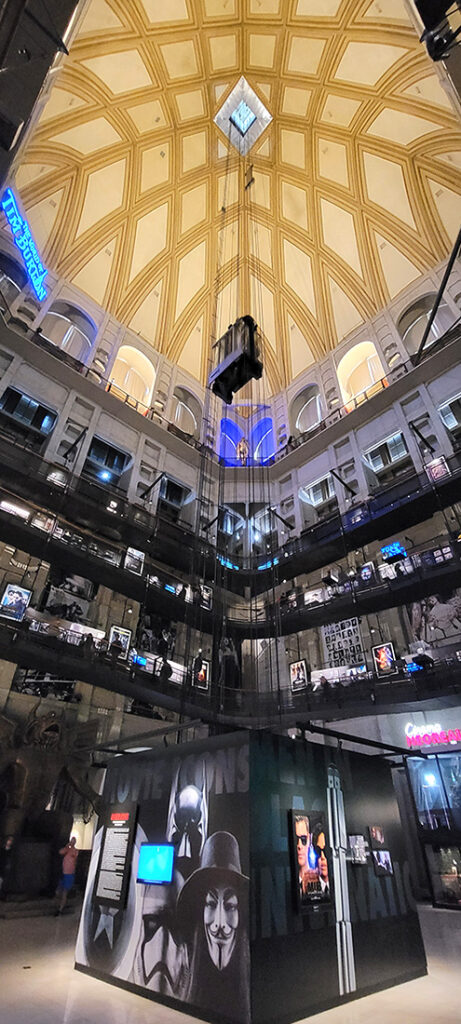
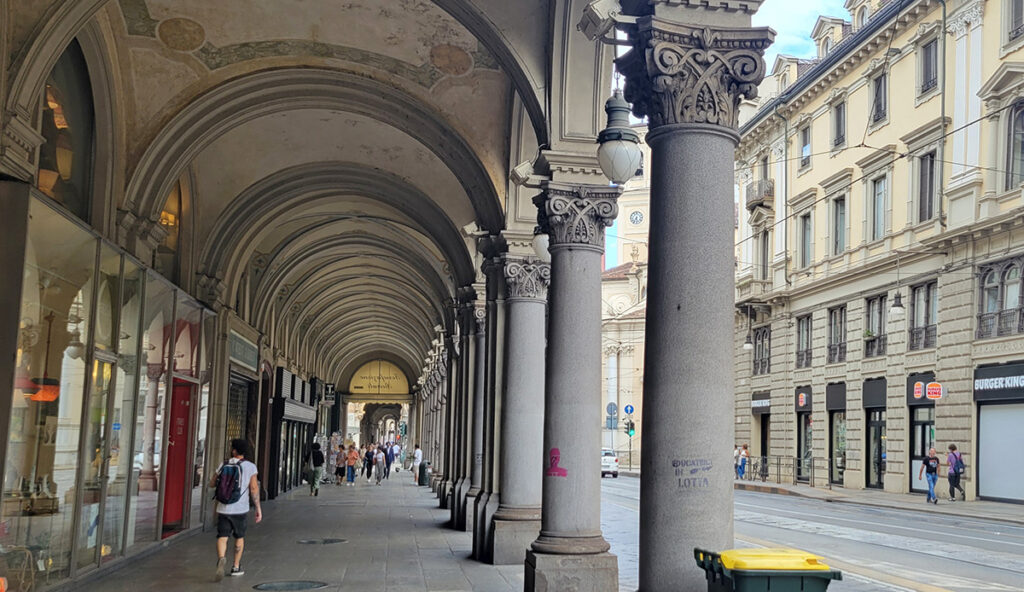
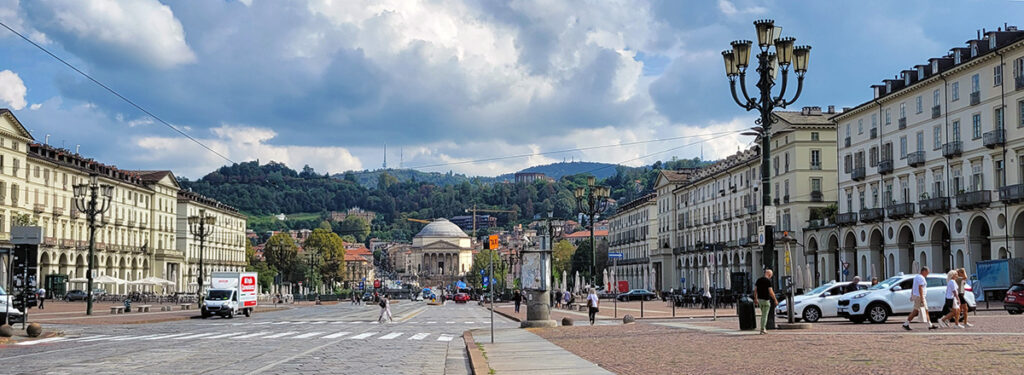
After visiting the museum, I walked down one of the main streets in the city toward the waterfront along the River Po, and then my plan was to walk about 20 minutes out of the way to go to the Latin grocery store to get the ingredients for chicken chili. Some of the main streets have porticos over the sidewalks which helped give the city a grand feel. The views on the river were very pretty and much greener than I expected.
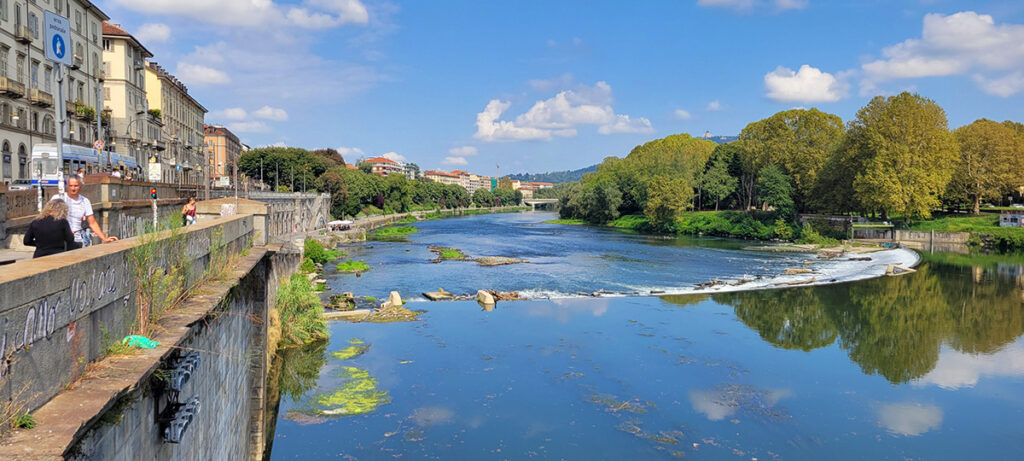
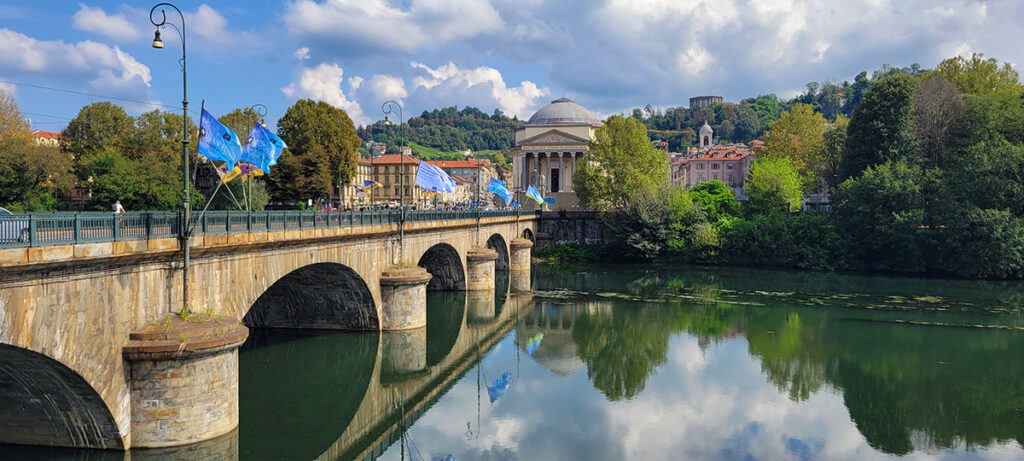
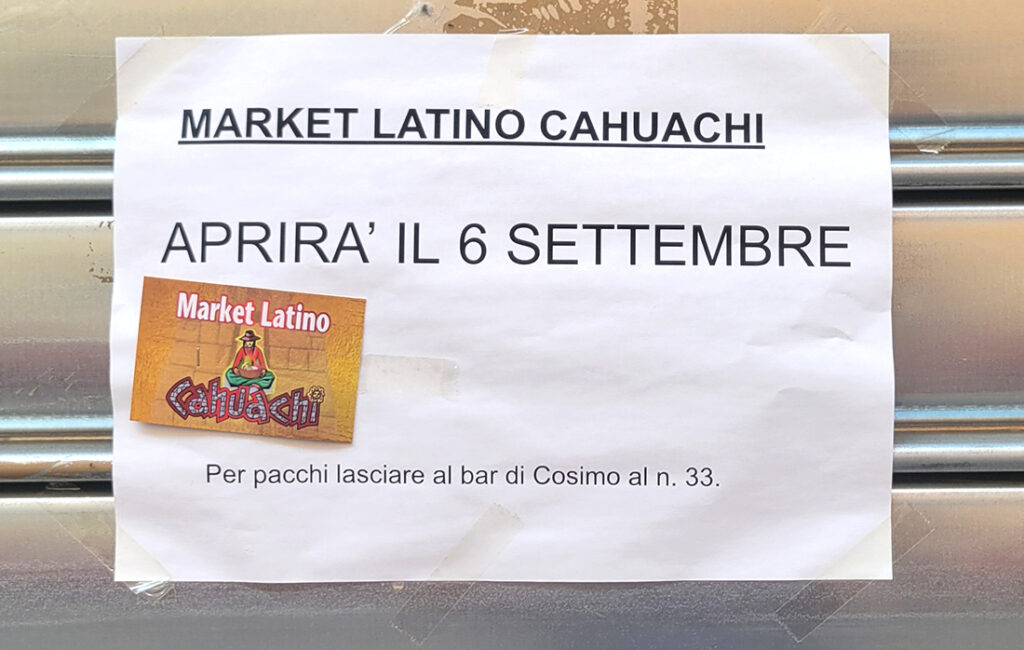
As planned, I made my way to the Latin market. But I was quite disappointed to find this sign on the door. Unfortunately, It was only September 2nd, and apparently the owners had not yet returned from their summer vacation. There would be no chicken chili!
Italian Workaway #2: Observations & Takeaways
I had a great time staying with Renza and Gianni. Here are some of my observations from the visit.
- Italian food is simple and meals do not need to be complicated. When I say the food is simple, I mean that they tend not to add a lot of different ingredients. I learned that simple can still be delicious. One thing I noticed in the houses where I stayed, as well as restaurants and grocery stores, is that salad dressings aren’t really a thing. Instead, they simply use olive oil, and vinegar or lemon. Also, their meals don’t have to follow any rules. For me, I always felt that a meal has to be thought out and the ingredients have to work together. In Italy, they would often just pull things out of the refrigerator and put them on the table. If they need more food on the table, they can always put out some cheese, or tomatoes, or olives. Maybe this is why Americans eat too much pre-made and fast food; we make meal planning too complicated.
- The reputation that Italians have of being passionate when they talk is very true. As an Italian-American I really already knew this from my own family, but it was nice to see and confirm in Italy that it is perfectly normal (i.e., not rude) to be loud and argumentative. (I hope my husband believes me now.) When my hosts had a gathering at their house, I sat back and really enjoyed listening to the lively and animated conversations, even when I couldn’t understand much of it.
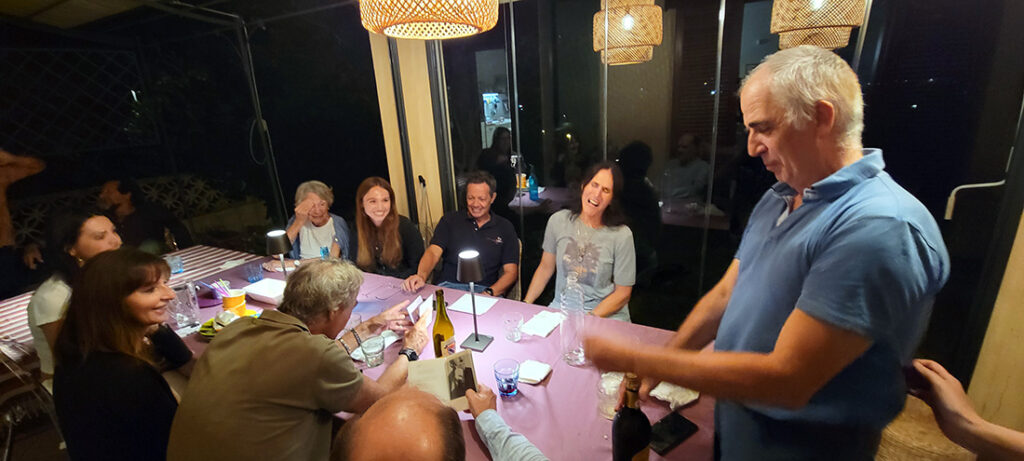
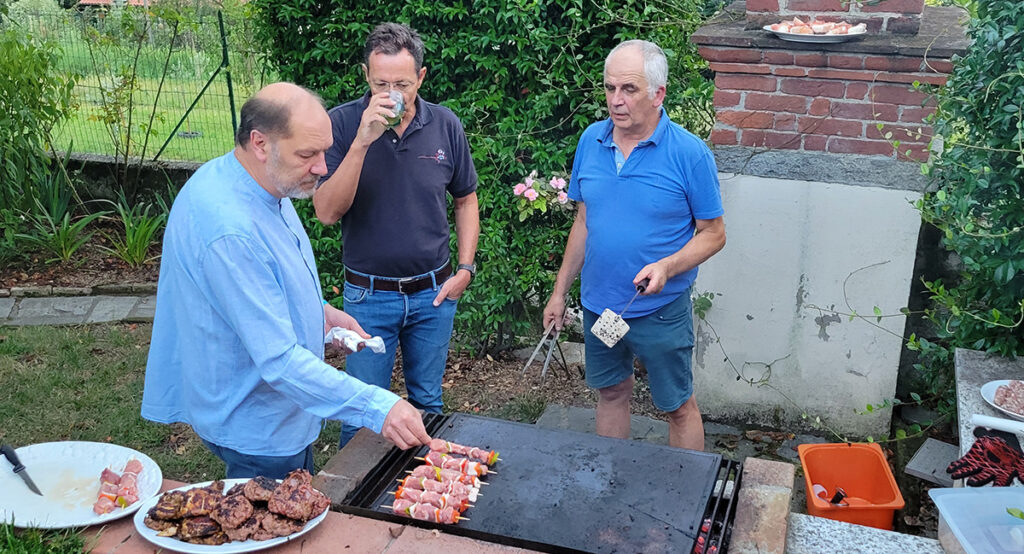
- Italian gatherings aren’t much different than American ones (except maybe louder). When Renza and Gianni had their friends over for a barbeque, I noticed the similarities to a typical American gathering. The host provides the main course and everyone brings something to share. The closest friends of the host help in the kitchen. And most notably, the men all gather around the grill drinking beer!
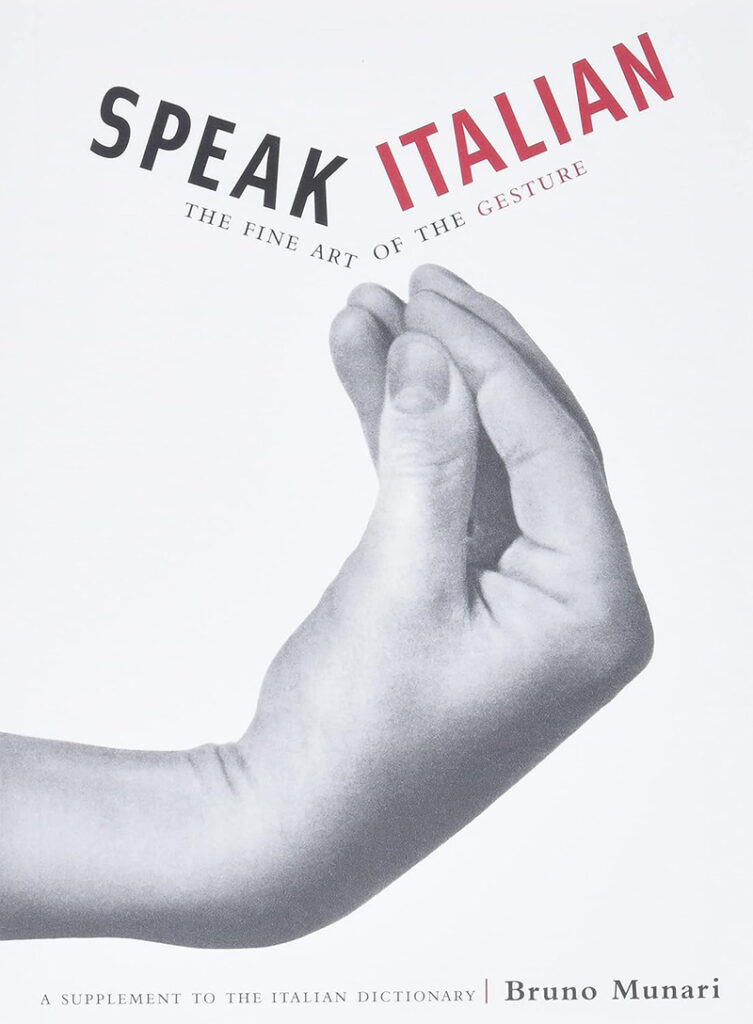
- Hand gestures really are an important part of communicating for Italians. I’ve always talked with my hands, but I hadn’t realized that in Italy, most all hand gestures have meanings which are used universally. My hosts showed me a book that their American friends had given them. It’s called “Speak Italian : The Fine Art of the Gesture“*. What amused me about it the most was that the book wasn’t meant to be funny – it was a serious book about how to interpret and make Italian hand gestures! This little book got passed around at the BBQ gathering and Renza and Gianni’s friends critiqued whether they thought it was correct. With just one exception, they agreed with the book’s translation of hand gestures. The book made for good dinner party conversation.
- The Italian language has an unusally large number of words that relate to food and sex. For example, when helping Renza in the kitchen, she was asking me to clean some vegetables in preparation for cooking (“mondare” in Italian) and she wanted to know what the English word was for that. I said “wash” or “clean”. But that wasn’t what she was looking for, she wanted to know the word that means specifically to clean/peel vegetables. She was surprised to learn that there isn’t one. Other examples include “scarpetta” which means to mop up the remaining sauce on your plate with a piece of bread, and “culaccino” which refers to the wet mark left on a table from a cold glass. Regarding Italian words related to sex that don’t have a direct English translation… I’ll leave that to the reader to research.
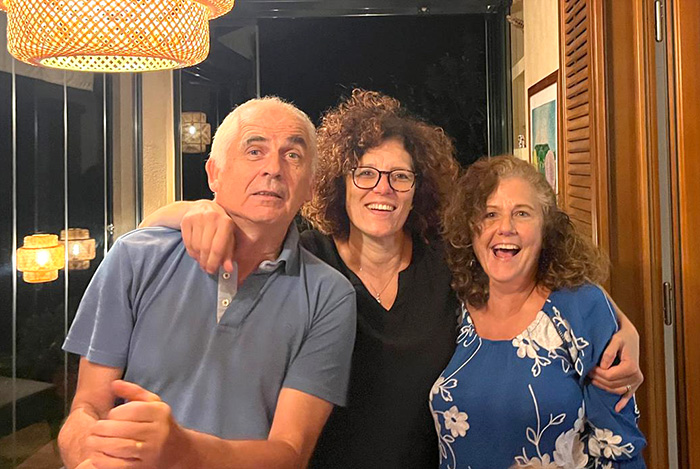
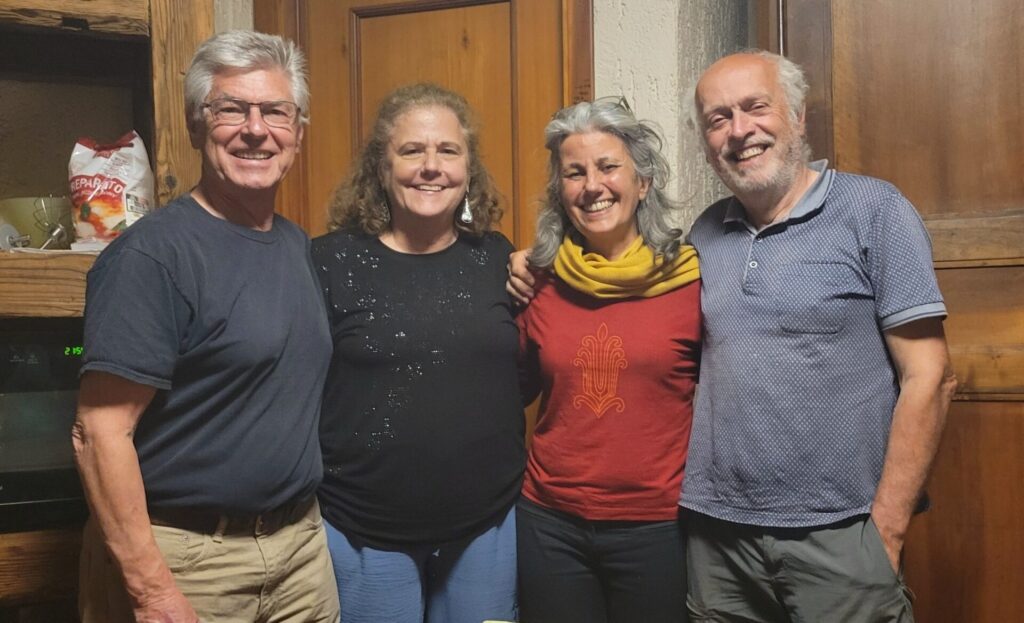
The night of the party was my last in Ivrea. I was sad to leave Renza and Gianni; I really felt that I had made new friends. The next morning they took me to a bus stop to catch a bus to the Milan airport where I met my sister-in-law who had just flown in from Massachusettes. I spent another 10 days in Italy with her being tourists. But that’s another story. Although I do still like to see the sights, doing these two workaways was the true cultural immersion that I was hoping for!
1 thought on “Workaway in Italy – A Cultural Immersion”
Pingback: Workaway - A Unique Travel Experience - Travel Sage